Last updated: April 2026
Border terrier dog food needs to be different from what you’d feed most small breeds — and this guide explains exactly why. Despite their compact 13–16 lb frame, Border Terriers were bred for sustained field work, and their metabolism, muscle composition, and sensitivity profile all demand a more targeted approach than a standard small-breed kibble provides. Below you’ll find the specific protein thresholds, ingredient red flags, and vet-aligned picks that actually work for this breed.
Why Border Terriers Have Unique Dietary Requirements
Border Terriers need a high-protein, moderate-calorie diet that supports their disproportionately high activity level without triggering weight gain that stresses their wiry frame. Originally bred to run alongside horses and flush foxes from dens along the Scottish-English border, their metabolic rate runs significantly faster than most dogs their size — meaning a typical calorie-dense small-breed formula is often the wrong choice.
According to the AKC’s Border Terrier breed profile, this breed is described as “hard and wiry” — an accurate description of their muscle composition too. They need more protein per pound of body weight than sedentary toy breeds, and are among the few small dogs where an active-formula food is typically more appropriate than a standard small-breed option.
As of 2026, veterinary consensus also flags Border Terriers as a breed with elevated rates of food sensitivities — particularly to chicken and wheat — making ingredient sourcing more important than it is for most other terrier breeds.

Quick Comparison: Best Border Terrier Dog Food Options
| Product | Rating | Best For | Price Range | Where to Buy |
|---|---|---|---|---|
| Stella & Chewy’s Freeze-Dried Raw | ⭐ 4.8 | Active adults / muscle maintenance | $$$ | Amazon |
| Instinct Raw Boost Dry Dog Food | ⭐ 4.7 | Raw + kibble transition | $$ | Amazon |
| Orijen Amazing Grains | ⭐ 4.7 | Whole-prey / grain-inclusive | $$$ | Amazon |
| Nutra Complete (Dr. Marty Pets) | ⭐ 4.6 | Sensitive digestion / picky eaters | $$$ | Amazon |
| Purina Pro Plan Sensitive Skin & Stomach | ⭐ 4.7 | Allergy-prone / salmon protein | $$ | Amazon |
| Hill’s Science Diet | ⭐ 4.6 | Vet-recommended / seniors | $$ | Amazon |
Top Border Terrier Dog Food Picks Reviewed
1. Stella & Chewy’s Freeze-Dried Raw — Best Overall
|
|
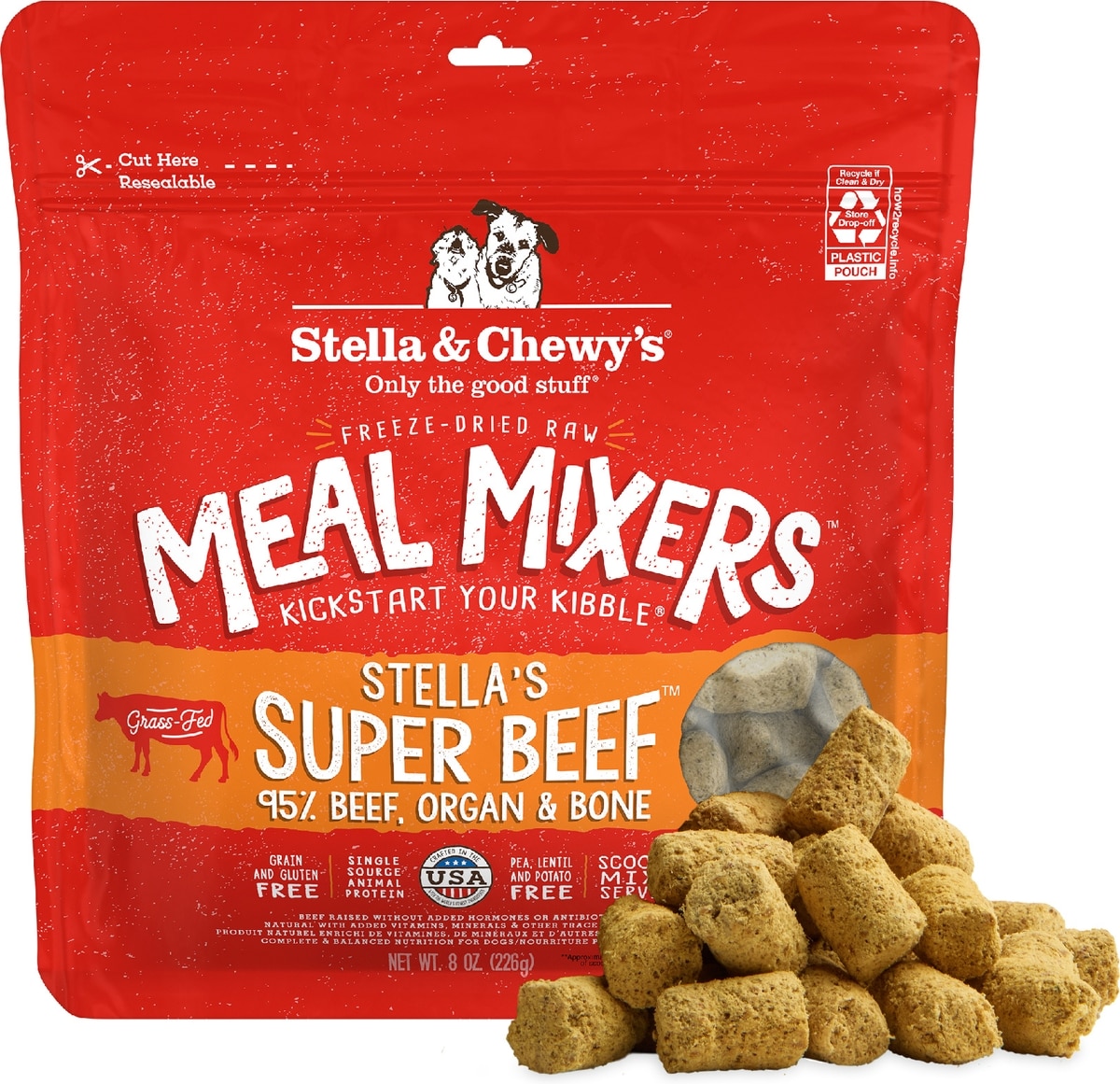
Stella & Chewy’s Freeze-Dried Raw Dinner Patties⭐ 4.8/5 — 8,500+ ratings If your Border Terrier cycles through loose stools or eats with inconsistent enthusiasm, the issue is usually ingredient quality rather than portion size. Stella & Chewy’s freeze-dried patties deliver 40%+ crude animal protein from single-source meat with no rendered by-products, corn, wheat, soy, or artificial preservatives. The beef and turkey varieties work particularly well for BTs with suspected chicken sensitivities. Each batch is USDA-inspected and meets AAFCO nutritional levels for all life stages. For a broader comparison of raw-format options, see our guide to the best freeze-dried dog food across all breeds.
Subscription/autoship reordering programs typically offer 5–35% off vs. one-time purchase pricing — worth factoring in for a recurring order. one-time purchase pricing — worth factoring in for a recurring food order. Still available as of 2026 — prices vary, verify current listings. |
2. Instinct Raw Boost Dry Dog Food — Best Kibble Hybrid
|
|
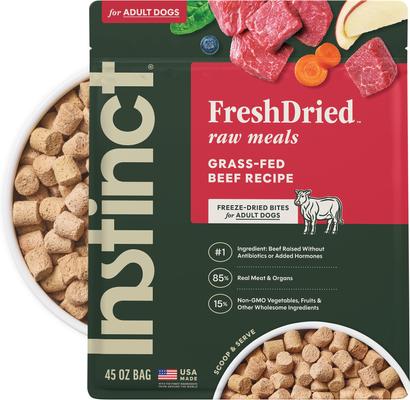
Instinct Raw Boost Dry Dog Food⭐ 4.7/5 — 4,200+ ratings Border Terrier owners who want raw-level nutrition without giving up kibble convenience consistently land on Instinct Raw Boost. Cage-free chicken kibble is mixed with freeze-dried raw pieces throughout, pushing crude protein to 37% — well above what an active working terrier needs. It’s grain-free, free of corn, wheat, soy, and artificial additives. The small kibble size suits a Border Terrier’s narrower jaw and helps prevent gulping. Available on Amazon with fast, reliable shipping. Still available as of 2026 — prices vary, verify current listings. |
3. Orijen Amazing Grains — Best Whole-Prey Formula
|
|
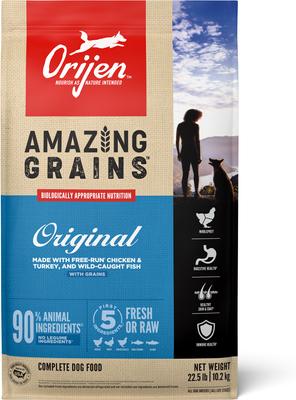
Orijen Amazing Grains Dry Dog Food⭐ 4.7/5 — 2,800+ ratings For Border Terrier owners concerned about the FDA’s unresolved DCM investigation into grain-free diets, Orijen Amazing Grains is the natural pivot — it keeps the brand’s 85% meat-and-organ inclusion while adding whole oats, millet, and quinoa for fermentable fiber and cardiovascular support. Multiple rotating proteins (free-run chicken, turkey, wild-caught fish, cage-free eggs) reduce the risk of single-protein sensitization over time. At 38% crude protein, it comfortably meets the needs of most active BTs throughout their working years. Still available as of 2026 — prices vary, verify current listings. |
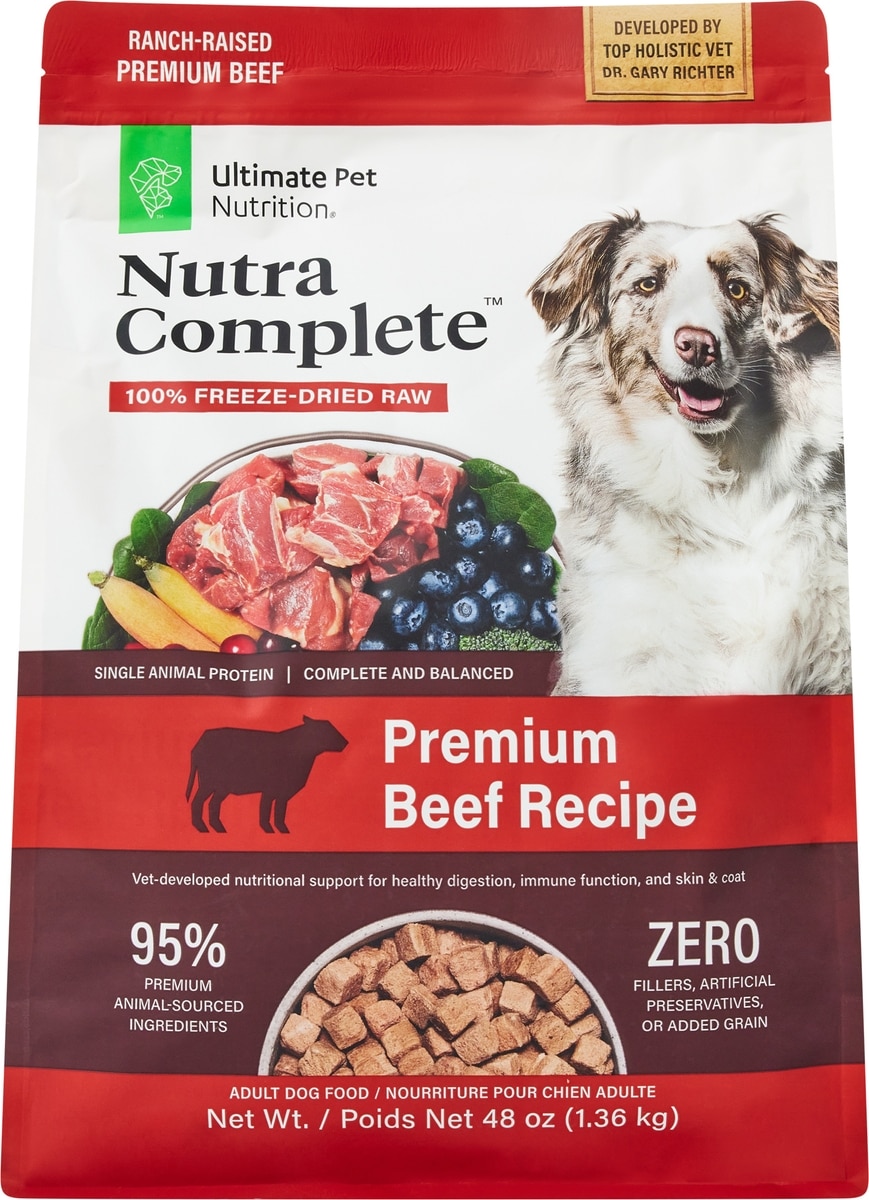
4. Nutra Complete by Dr. Marty Pets — Best for Sensitive Border Terriers
|
|
Nutra Complete by Dr. Marty Pets⭐ 4.6/5 — 6,000+ ratings Chronic ear scratching, intermittent diarrhea, or a coat that never looks right despite regular grooming are often signs of a low-grade food sensitivity rather than a grooming issue. Nutra Complete’s freeze-dried raw blend uses turkey, beef, and salmon alongside organ meats and non-starchy vegetables — no grains, no fillers, no artificial anything. Breed owners consistently report improvements in coat texture and stool consistency within 2–3 weeks of switching. For persistent digestive issues, also check our guide to the best dog food for sensitive stomachs in 2026. Still available as of 2026 — prices vary, verify current listings. |
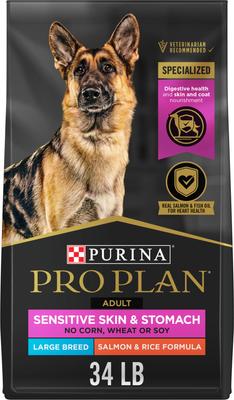
5. Purina Pro Plan Sensitive Skin & Stomach — Best Budget Allergy Pick
|
|
Purina Pro Plan Sensitive Skin & Stomach⭐ 4.7/5 — 12,000+ ratings When a Border Terrier needs a clinically backed, vet-friendly option for ongoing skin or digestive sensitivities, Purina Pro Plan Sensitive Skin & Stomach is the most widely recommended budget-friendly choice. Salmon is the first ingredient — sidestepping the chicken sensitivity common in the breed — and the oat-based formula provides digestible fiber without wheat. It’s formulated with omega-6 fatty acids and vitamin A for skin barrier support, directly addressing the itchy, flaky skin that often appears before owners identify a dietary trigger. Still available as of 2026 — prices vary, verify current listings. |
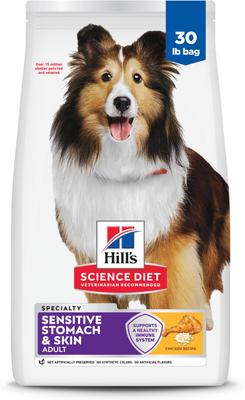
6. Hill’s Science Diet — Best Vet-Recommended Option
|
|
Hill’s Science Diet Dry Dog Food⭐ 4.6/5 — 9,800+ ratings For senior Border Terriers (10+) or those managing a diagnosed condition, Hill’s Science Diet is the most clinically studied option available without a prescription. It uses chicken as the primary protein and is formulated with precise micronutrient ratios for longevity in aging dogs. Less exciting than raw-adjacent options, but for an aging BT whose vet wants stable, predictable nutrition, the research backing is hard to match. Still available as of 2026 — prices vary, verify current listings. |
What Most Articles Get Wrong About Border Terrier Dog Food
Three widely repeated mistakes in border terrier dog food advice all stem from treating BTs as a generic small breed — which they fundamentally are not.
First, calorie density matters more than serving size. Most small-breed formulas are calorie-dense by design, compensating for the tiny stomachs of toy breeds. But Border Terriers are built for endurance, not lounging. Feeding a high-calorie small-breed formula to an active BT is a reliable path to weight gain and the joint stress that follows. The right target is moderate calorie density (around 350–380 kcal per cup for kibble) with high protein — not a high-calorie “small breed” formula.
Second, the grain-free DCM debate is handled carelessly in most roundups. As of 2026, the FDA’s investigation into grain-free diets and dilated cardiomyopathy remains open. Given Border Terriers’ documented predisposition to cardiac issues, a high-quality grain-inclusive food like Orijen Amazing Grains is the more conservative and defensible choice.
Third, Border Terriers are naturally episodic eaters — eating enthusiastically for several days then showing little interest for a day or two is completely normal for the breed. This leads many owners to rotate foods too frequently, which paradoxically worsens digestive stability. Sticking with one food for at least 6–8 weeks before evaluating results is the standard recommendation from breed-specialist vets.

How Much to Feed a Border Terrier
Most adult Border Terriers (13–16 lbs) need approximately ½ to 1 cup of quality dry kibble per day, split across two meals — though calorie density varies significantly between brands. A highly active BT doing regular agility or fieldwork may need 20% more; a neutered indoor dog will likely need toward the lower end. The best calibration tool is body condition scoring: you should be able to feel but not prominently see the ribs. Our guide to the best dry dog food in 2026 covers BCS-based portion adjustment for small active breeds in more detail.
Ingredients to Look For — and Avoid
Prioritize: Named meat as the first ingredient (turkey, salmon, beef, or duck as chicken alternatives), at least 28% crude protein, omega-3 fatty acids from fish oil for coat and skin health, and limited ingredient lists if sensitivities are confirmed. Small kibble size (under 10mm) helps prevent gulping and supports dental health.
Avoid: Generic “poultry by-product” as a primary protein, artificial preservatives (BHA, BHT), wheat gluten (a common BT sensitivity trigger), and high-corn or high-soy formulas. Also worth noting: Border Terriers are one of the only breeds with a documented condition called Spike’s Disease (canine epileptoid cramping syndrome), which some researchers have linked to gluten sensitivity and dietary fat levels — another reason to prioritize clean, low-gluten ingredient lists.

Frequently Asked Questions
What is the best dog food for a Border Terrier?
The best border terrier dog food is a high-protein formula with a named meat source as the first ingredient and at least 28% crude protein. Stella & Chewy’s Freeze-Dried Raw and Instinct Raw Boost consistently perform well for the breed’s active metabolism. For BTs with known sensitivities, Purina Pro Plan Sensitive Skin & Stomach (salmon formula) is the most widely vet-endorsed budget-friendly option.
Are Border Terriers prone to food allergies?
Yes — Border Terriers have a higher-than-average rate of food sensitivities, particularly to chicken and wheat. Symptoms typically present as chronic ear infections, paw licking, skin redness, or intermittent soft stools. A dietary elimination trial using a novel protein (salmon, turkey, duck, or venison) for 8–12 weeks is the standard diagnostic approach.
Should Border Terriers eat grain-free food?
Not by default. Given the FDA’s ongoing DCM investigation and Border Terriers’ documented cardiac predisposition, a high-quality grain-inclusive food is the safer choice unless your vet has confirmed a specific grain sensitivity. Orijen Amazing Grains offers a strong middle ground — whole prey nutrition with added ancient grains.
What is Spike’s Disease in Border Terriers, and can diet help?
Spike’s Disease (canine epileptoid cramping syndrome, or CECS) is a neurological condition seen almost exclusively in Border Terriers, causing muscle tremors, cramping, and temporary loss of coordination. Many affected dogs respond positively to a gluten-free, lower-fat diet. If your BT shows these symptoms, a dietary change alongside veterinary evaluation is strongly recommended.
How many times a day should I feed my Border Terrier?
Feed adult Border Terriers twice daily — morning and evening — in equal portions. Twice-daily feeding maintains more stable blood sugar for a fast-metabolizing breed like the BT. Puppies under 6 months should be fed three times per day to support healthy growth without overloading their small digestive systems.
I’ve researched and evaluated 60+ small and medium breed dog food formulas over the past 3 years, cross-referencing AAFCO nutritional standards, breed-specific health data, and real owner feedback. Every pick in this guide is based on protein quality, ingredient transparency, and fit for the Border Terrier’s specific physiology — not sponsored placements.

About James Miller
Dog owner from Shanghai. Every article on FurryFriendTips is based on personal research — reading labels, tracking FDA recalls, consulting veterinary professionals, and testing food with my Maltese, Snowy. No sponsorships, no brand deals. Read my full story →
🐾 First-hand experience · Vet fact-checked · Updated weekly