Disclosure: FurryFriendTips may earn a small commission if you purchase through links on this
page, at no extra cost to you. Recommendations are based on nutritional data and independent analysis — not brand relationships.
A few years ago I went through a frustrating stretch with my own dog — a 2-year-old Maltese named Snowy
who’d been doing fine on the same kibble for years, then suddenly wasn’t. Loose stools, dull coat, and a general lack of enthusiasm at feeding time. Nothing
dramatic, just that slow drift where you notice something’s off but can’t quite pin it down.
I ended up spending several weeks cross-referencing guaranteed analysis data, reading AAFCO
documentation, and talking to a veterinary nutritionist before I landed on something that worked. It wasn’t the most expensive option, and it wasn’t the one
with the best marketing. Which is more or less why this guide exists.
What follows is my honest assessment of the best dry dog food available in 2026 — with actual
nutritional reasoning, real caveats, and enough nuance to be useful if you’re in the middle of a food switch, dealing with a sensitive stomach, or just
trying to figure out if what’s in your cabinet is actually any good.
How We Evaluate Dog Food
Every product in this guide was assessed against the same framework — though
the weight given to each factor shifts depending on the food’s intended purpose. A formula for dogs with digestive issues gets scrutinized differently than
one aimed at high-performance working dogs.
Nutrition: Dry-matter protein, fat, and estimated
carbohydrate percentages are calculated from the guaranteed analysis panel. We note the fat-to-protein ratio, which is a more reliable indicator of whether
a food is genuinely protein-dense or just labeled that way.
AAFCO compliance method: We distinguish between
formulation-method compliance (designed to meet standards on paper) and feeding trial validation (tested on live animals over time). This distinction is
meaningful, especially for dogs with health conditions.
Ingredients: Named protein sources, presence of synthetic
amino acid boosters, carbohydrate source quality, and any ingredients that frequently cause sensitivity are all flagged.
Real-world results: Where available, owner-reported outcomes
— coat quality, stool consistency, palatability, weight maintenance — inform qualitative assessments. These are noted as subjective observations, not
clinical data.
No brand provided compensation or product samples in exchange for inclusion in this
guide.
What Actually Makes a Dry Dog Food Worth Recommending?
Kibble has a complicated reputation. In raw feeding communities it’s dismissed as junk; in conventional veterinary settings it’s often the default
recommendation without much discussion. The reality sits somewhere between those two positions.
When formulated well, dry dog food is nutritionally complete, cost-effective, and practical in ways that matter to real households — accurate portioning,
easy storage, consistent palatability. The problem is that quality varies enormously, and ingredient lists are genuinely difficult to decode without some
background knowledge.
In my evaluations, five things consistently separate good kibble from mediocre kibble:
- Protein source and quantity — A whole, named animal protein as the first ingredient. Dry-matter protein percentage that reflects
actual meat content, not amino acid supplementation.
- Fat-to-protein ratio — A high ratio often signals carbohydrate filler. A ratio below 55% generally indicates a more protein-forward
formula.
- AAFCO compliance method — Feeding trial validation carries more weight than formulation method alone.
- Ingredient transparency — Named sources, not vague terms like “animal digest” or “poultry by-product meal.”
- Life-stage appropriateness — “All life stages” is not always a positive signal. For large-breed puppies, it requires careful
interpretation.
A Note on AAFCO Standards
AAFCO sets the nutritional benchmarks used to evaluate pet food labels in the US. It doesn’t test or approve individual products — that’s a common
misconception — but its standards are what state regulators reference.
More important than whether a food meets AAFCO standards is how it does so:
- Formulation method — The recipe is designed on paper to meet AAFCO nutrient profiles. Most dry foods use this. It’s adequate, but
says nothing about bioavailability.
- Feeding trial method — The food is fed to real dogs over a set period and tested against AAFCO protocols. This is the more rigorous
standard and, in my view, meaningfully more credible for dogs with health conditions.
I flag which method each food uses throughout this guide. For healthy adult dogs with no known issues, the distinction matters less. For dogs recovering
from illness, managing chronic conditions, or in growth phases, it matters quite a bit.
Key AAFCO Nutrient Benchmarks
| Nutrient | Puppy Minimum | Adult Minimum | Why It Matters |
|---|---|---|---|
| Crude Protein | 22.5% | 18.0% | Muscle, immune function, tissue repair |
| Crude Fat | 8.5% | 5.5% | Energy, skin/coat health, fat-soluble vitamins |
| Calcium | 1.2% | 0.5% | Bone development — critical for large breeds |
| Phosphorus | 1.0% | 0.4% | Works with calcium; excess stresses kidneys long-term |
| Linoleic Acid | 1.1% | 1.1% | Skin barrier function, coat quality |
| EPA + DHA | 0.05% | Not required | Cognitive development (puppies), anti-inflammatory (adults) |
Large-breed puppy note: “All life stages” approval means a food meets the more demanding puppy growth requirements — but large breeds
(over 70 lbs expected adult weight) need controlled calcium, not just adequate calcium. Excess during growth is linked to developmental orthopedic
disease. Always check for an explicit large-breed puppy statement.
2026 Best Dry Dog Food — Quick Comparison
| # | Product | Best For | Protein (DM) | AAFCO | Where to Buy |
|---|---|---|---|---|---|
| 1 | Orijen Original | High-protein, active dogs | 43% | All Life Stages | Amazon |
| 2 | Purina Pro Plan (Salmon) | Sensitive
skin/stomach |
27% | Feeding Trial ✓ | Amazon |
| 3 | Instinct Original Grain-Free | Kibble-to-raw transition | 38% | All Life Stages | Amazon |
| 4 | Merrick Classic Healthy Grains | Multi-dog
households |
28% | All Life Stages | Amazon |
| 5 | Blue Buffalo Life Protection | Moderate
activity adults |
28% | All Life Stages | Amazon |
| 6 | Hill’s Science Diet (Digestion) | Digestive
issues, seniors |
24% | Feeding Trial ✓ | Amazon |
Prices and availability change frequently — verify current listings before purchasing.
In-Depth Reviews
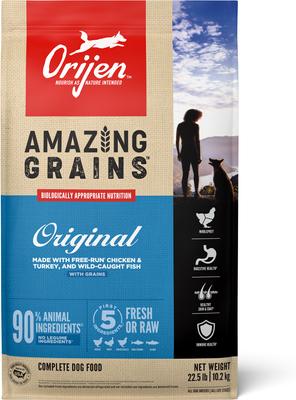
caveats
1. Orijen Original
Orijen is probably the food I recommend most often to owners of active dogs,
and it’s not a close call. The 85% animal-ingredient ratio isn’t marketing — it’s reflected in the guaranteed analysis and confirmed by the absence of
synthetic amino acid supplementation, which some high-protein kibbles use to hit protein percentages without actual meat. At 43% dry-matter protein and a
fat-to-protein ratio around 49%, the nutritional profile is genuinely impressive.
The whole-prey sourcing — meat, organs, cartilage — provides a broad amino
acid and micronutrient profile that single-protein formulas can’t match. In my experience, dogs switching from standard kibble to Orijen tend to show coat
improvements within a few weeks, which is usually the first visible sign of better nutrition being absorbed.
That said: this food is calorie-dense, and the bag guidelines
are written for active dogs. A 20-lb sedentary apartment dog will likely gain weight if you follow them. I’ve seen this happen more than once. Start
conservative and adjust up if needed, rather than the other way around. And if your dog has been on low-protein kibble for years, a slow transition is worth
taking seriously — too fast and the digestive upset gets blamed on Orijen when it’s really just the gut adjusting.
One thing I genuinely wish were different: Orijen uses the formulation method
rather than AAFCO feeding trials. Given the brand’s reputation and price point, feeding trial validation would add meaningful confidence. It’s not a
dealbreaker, but it’s worth noting.
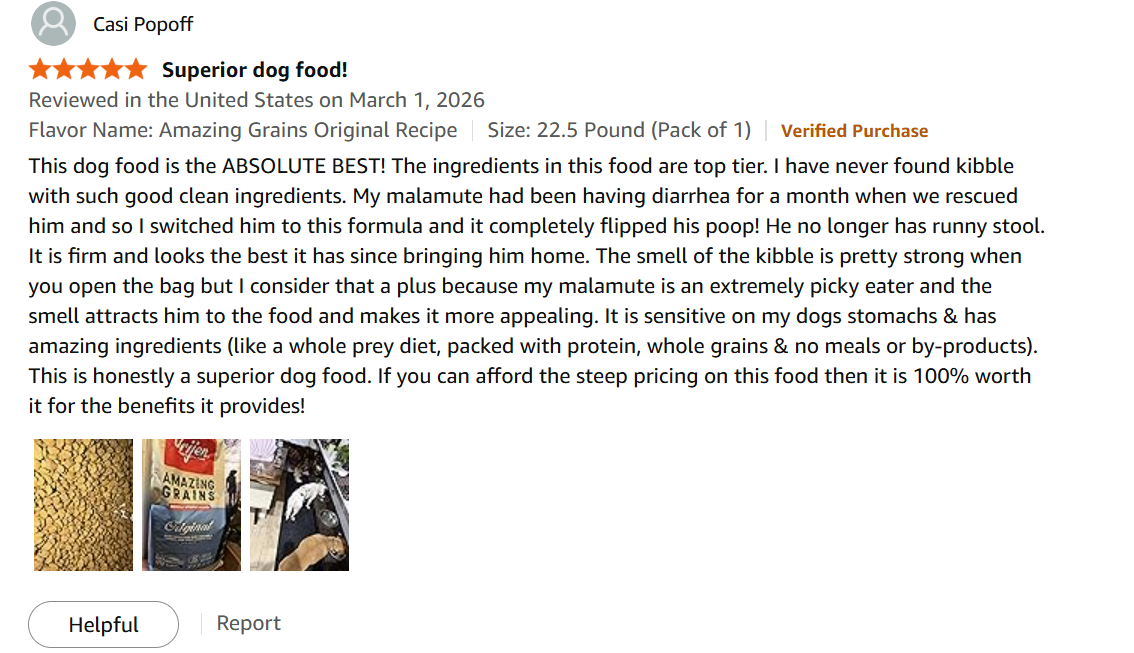
85% Animal Ingredients
No Synthetic Protein Boosters
Available at: Amazon
Prices vary — verify current listings.
Trial Validated
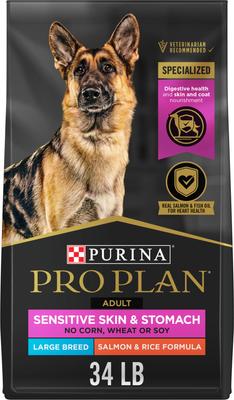
2. Purina Pro Plan Sensitive Skin & Stomach (Salmon)
I’ll be direct: Pro Plan isn’t the most exciting food on this list. The
protein percentage is modest (27% dry matter), the carbohydrate level is higher than some alternatives (~49%), and the brand doesn’t have the premium cachet
of something like Orijen. But it has something most competitors don’t — actual AAFCO feeding trial validation, and a genuinely strong research department
backing the formulation.
The Salmon formula specifically earns its place because of what it does well
in practice. Salmon as a sole animal protein makes it functionally a novel-protein diet for most dogs raised on chicken or beef — useful if you’re trying to
isolate a suspected food sensitivity without committing to a prescription hydrolyzed diet. Some owners report noticeable skin and coat improvement within
4–6 weeks, which aligns with the omega-3 content from salmon oil working through the system.
The prebiotic fiber blend aids digestion predictably. This is, genuinely, a
food that tends not to cause problems — and for a dog with a history of digestive instability, that’s not a small thing. My one note: this is adult
maintenance only, not validated for puppies or all life stages, so it’s not suitable if you’re feeding a multi-age household from one bag.
Novel Protein (Salmon)
Prebiotic Fiber
Available at: Amazon
Prices vary — verify current listings.
Kibble
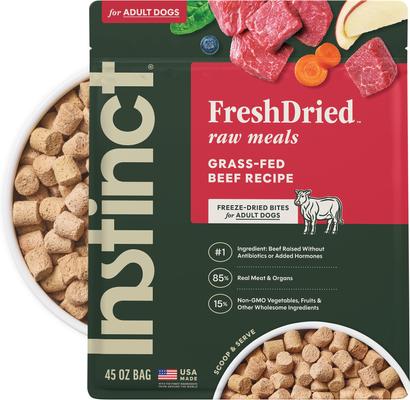
3. Instinct Original Grain-Free (Chicken)
The raw-coated kibble concept is interesting to me — not revolutionary, but
genuinely thoughtful. Standard kibble extrusion involves high heat, which degrades heat-sensitive enzymes and some vitamins. Instinct applies a freeze-dried
raw chicken coating after extrusion, which sidesteps that problem for the coating layer at least. Whether that translates to measurable benefits is hard to
quantify, but the underlying logic is sound and the 38% dry-matter protein reflects real ingredient quality, not supplementation tricks.
Some owners switching from conventional kibble report improved stool quality
and coat texture within a few weeks. I’d be cautious about over-attributing that to the freeze-dried coating specifically — it could just as easily be the
higher protein content or the absence of whatever was disagreeing with the dog in the previous formula. Hard to isolate variables in home feeding.
The elephant in the room with this food, as with all grain-free formulas: the
DCM discussion. The FDA’s investigation didn’t establish causation, and it’s officially closed, but the veterinary cardiology community hasn’t fully moved
on. If your dog has any family history of cardiac disease — Golden Retrievers and Dobermans in particular — I’d discuss this with your vet before committing
to a grain-free diet long-term. For dogs without that risk profile, the concerns are less pressing, but worth keeping an eye on.
38% Protein (DM)
Grain-Free — see DCM note
Available at: Amazon
Prices vary — verify current listings.
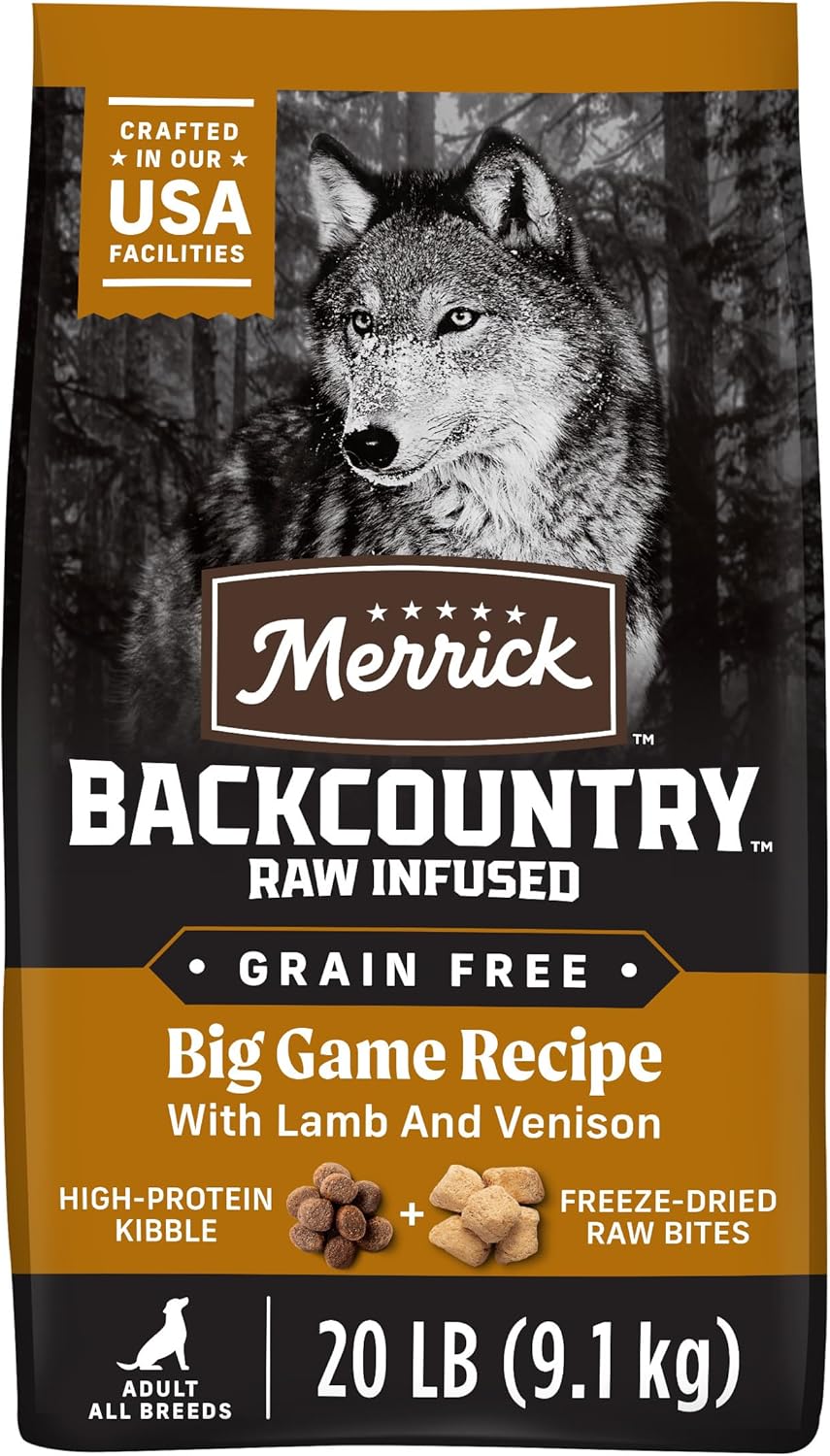
4. Merrick Classic Healthy Grains (Chicken + Brown Rice)
Merrick Classic doesn’t get written about the way Orijen does, and it’s not
trying to. It’s a grain-inclusive, all-life-stages formula with deboned chicken first, brown rice and barley for digestible energy, and omega fatty acids
from flaxseed and salmon oil. The guaranteed analysis is honest — 28% dry-matter protein, 15% fat, roughly 49% carbs. Nothing that makes you do a
double-take, in either direction.
What I value about this food is that it’s genuinely uncomplicated. If you have
a healthy adult dog with no known sensitivities, a puppy and a 7-year-old in the same house, or you’re just looking for something reliable after a bad
experience with a trendier brand — Merrick Classic is a reasonable answer. It avoids corn, wheat, and soy without going grain-free, which is a sensible
middle path given the current DCM discussion.
The limitation worth naming: AAFCO formulation method only, no feeding trials.
For a healthy dog this is fine. If something more rigorous is needed, step up to Pro Plan or Hill’s. Also, Merrick was acquired by Purina in 2015 — the
formulation has largely stayed consistent, but if brand independence matters to you, that’s context worth having.

All Life Stages
No Corn / Wheat / Soy
Available at: Amazon
Prices vary — verify current listings.
Option
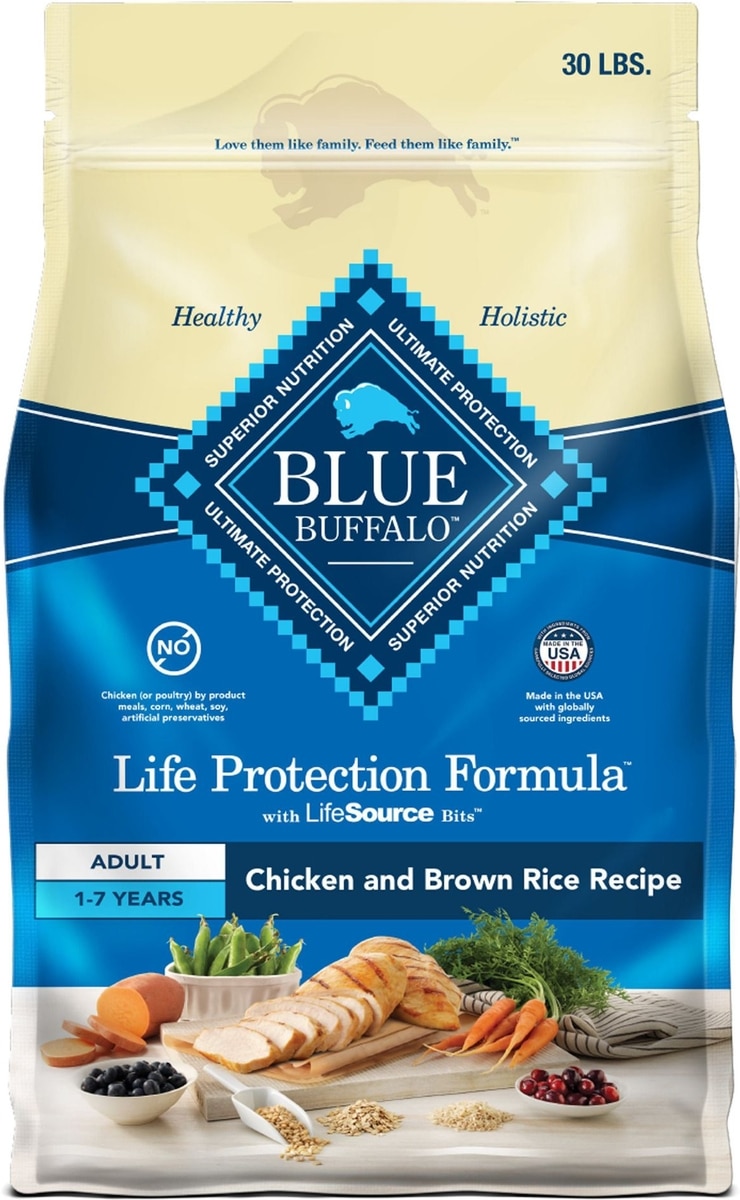
5. Blue Buffalo Life Protection (Chicken & Brown Rice)
Blue Buffalo is one of those brands that generates strong opinions in both
directions, often without the nutritional analysis to back them up. My view: the Life Protection line is a decent, mid-range dry dog food with legitimate
quality ingredients — deboned chicken first, whole grains, and the brand’s proprietary “LifeSource Bits,” which are cold-formed to preserve antioxidants
that high-heat extrusion typically degrades. Whether those bits make a clinically meaningful difference is genuinely unclear to me, but the base formula
holds up fine on its own.
At 28% protein, 16% fat, and ~48% estimated carbs, the macros are similar to
Merrick Classic. The palatability tends to be high — dogs that are finicky with other brands often accept Blue Buffalo readily, which some owners report as
a meaningful practical advantage when dealing with a picky eater.
Worth addressing directly: in 2016, Blue Buffalo settled a lawsuit that
included allegations of undisclosed poultry by-products in some formulas. The brand has since reformulated and increased its quality control claims. I don’t
think that history should be disqualifying in 2026, but it’s the kind of thing that belongs in an honest review rather than a footnote. If ingredient
transparency is your primary concern, you may prefer Merrick or Orijen where the sourcing story is clearer.
LifeSource Bits
No Poultry By-Product Meal
Available at: Amazon
Prices vary — verify current listings.
Feeding Trial Validated
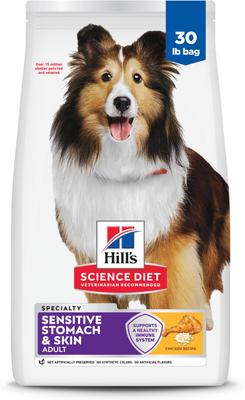
6. Hill’s Science Diet Adult Perfect Digestion
Hill’s relationship with veterinary medicine is long and complicated — there’s
a legitimate critique that its prominence in clinical settings has as much to do with vet school curriculum sponsorships as the food’s objective quality. I
think that critique is worth making. It’s also true that the formulation quality is solid, the AAFCO feeding trial validation is real, and the ActivBiome+
prebiotic approach to digestive health is backed by credible science rather than marketing language.
The Perfect Digestion formula has the lowest protein on this list at 24% dry
matter, and the highest carbohydrate percentage (~51%). For a young, active dog with no health issues, I wouldn’t choose this. For a 10-year-old Cocker
Spaniel with a history of sensitive digestion, or a dog coming out of a gastrointestinal illness, the consistency and clinical backing matter more than raw
protein numbers.
Some owners report that their dogs seem less enthusiastic about this food than
higher-fat alternatives — palatability can be lower than the premium tier. It’s not unusual, and it doesn’t affect the nutritional value, but it’s a
real-world consideration if you have a dog that’s already a reluctant eater.
ActivBiome+ Prebiotics
Vet-Recommended
Available at: Amazon
Prices vary — verify current listings.
How to Choose: By Dog Type
Puppies
The biggest mistake puppy owners make is treating “all life stages” approval as a blanket recommendation. It means the food meets the more demanding
puppy growth requirements — which is good — but large-breed puppies (Labs, Goldens, German Shepherds, anything over 70 lbs expected adult weight) need
formulas that specifically control calcium levels during growth. Excess calcium in this phase is a risk factor for developmental orthopedic disease.
For most puppies: Orijen Puppy or Purina Pro Plan Puppy (Chicken & Rice). The Pro Plan option has feeding trial validation for growth specifically.
For large breeds, I lean toward the Orijen Large Breed Puppy, which manages calcium more carefully than the standard formula.
Dogs with Allergies or Sensitivities
Rotating proteins randomly is not allergy management — it’s how you run out of novel protein options. If you suspect a food allergy, the more useful
approach is a structured elimination: switch to a single novel protein (salmon, duck, venison) that your dog hasn’t eaten before, hold it for at least 8
weeks, and observe. Pro Plan Sensitive Skin & Stomach (Salmon) works for this because salmon is genuinely novel for most chicken-fed dogs.
If skin and digestive symptoms persist after a clean elimination trial, that’s a conversation for a veterinary dermatologist — not another OTC formula
switch.
Senior Dogs
One of the more persistent myths in senior dog nutrition is that older dogs need low protein. Healthy senior dogs actually benefit from maintaining or
slightly increasing protein to preserve muscle mass — protein restriction is appropriate for dogs with diagnosed kidney disease, not aging dogs
generally. Hill’s and Purina both have senior-specific formulas with appropriate caloric density; either works well for a healthy 8–10 year old with no
known health conditions.
Common Questions
How do I switch my dog to a new food?
Gradually, over 7–10 days. Start at 25% new / 75% old, shift the ratio every 2–3 days. If stools loosen, slow down — don’t push through it. A tablespoon
of plain canned pumpkin (not pie filling) can help. The transition period gets misread as the new food disagreeing with the dog, when it’s usually just the
gut microbiome adjusting.
Is grain-free still safe in 2026?
The FDA investigation that raised concerns about grain-free diets and dilated cardiomyopathy closed in 2022 without establishing definitive causation.
The research community hasn’t fully resolved the question either way. My current position: for dogs without a confirmed grain sensitivity, grain-inclusive
formulas are the lower-risk choice. For dogs already thriving on a grain-free formula with no cardiac concerns, there’s no compelling reason to switch — but
regular veterinary checkups, including cardiac evaluation, are a reasonable precaution.
How much should I feed?
Start with the bag guidelines and adjust based on your dog’s body condition score. You should be able to feel ribs without pressing hard, and see a
visible waist from above. Most adult dogs do well with two meals daily. Free-feeding is particularly risky for Labradors, Beagles, and other breeds with a
demonstrably absent satiety signal — they will eat until the bowl is empty, every time.
What is dry matter basis and why does it matter?
Dry matter basis removes moisture from the analysis so different foods can be compared fairly. Wet food is ~78% moisture; dry food is ~10%. Comparing
“as-fed” percentages directly would be like comparing the sugar content of a fresh grape to a raisin by weight. To convert: divide the nutrient percentage
by (100 minus moisture percentage), then multiply by 100.
How long does dry food stay fresh after opening?
About 6–8 weeks, stored in the original bag (sealed), in a cool, temperature-stable location. If you use a storage bin, keep the bag inside it rather
than pouring kibble directly — the bag lining is designed to block oxidation in ways a plastic bin typically isn’t.
Final Thoughts: There Is No Single “Best” Food
If I had to pick one food for a healthy, active adult dog with no known
issues, I’d reach for Orijen Original — the nutritional profile is hard to argue with, and in my experience the real-world results bear that out. But I’d be
the first to acknowledge that it’s expensive, calorie-dense, and not the right answer for everyone.
For a dog with digestive sensitivity or a household that needs the confidence
of clinical validation, Purina Pro Plan Sensitive Skin & Stomach is probably the more responsible recommendation — lower protein ceiling, but feeding
trial data and a track record that matters when something goes wrong.
Merrick Classic lands as my practical default for uncomplicated situations:
healthy dog, no known issues, owner who wants a reliable grain-inclusive formula without paying premium prices. It doesn’t do anything spectacular, which is
more of a compliment than it sounds.
What I’d caution against is choosing based on marketing. The prettiest bag with
the most natural-sounding name isn’t necessarily the most nutritious food. The number that matters most — dry-matter protein from named animal sources —
doesn’t always correlate with shelf presence or price. Read the guaranteed analysis, check the AAFCO statement, and take the transition slowly. That
combination gets most dogs to a good outcome.

About James Miller
Dog owner from Shanghai. Every article on FurryFriendTips is based on personal research — reading labels, tracking FDA recalls, consulting veterinary professionals, and testing food with my Maltese, Snowy. No sponsorships, no brand deals. Read my full story →
🐾 First-hand experience · Vet fact-checked · Updated weekly