Disclosure: FurryFriendTips may earn a commission if you purchase through links on this page, at no extra cost to you. All evaluations are based on nutritional data and independent analysis — not brand relationships.
What This Review Covers
A deep dive into Taste of the Wild’s formulation history, ingredient transparency, recall record, and how its grain-free formulas stack up against the current state of canine nutrition science. Includes what the brand does well, where it falls short, and which alternatives deserve consideration.
Taste of the Wild has been one of the most visible grain-free dog food brands in the United States for over a decade. The brand occupies shelf space in virtually every major pet retailer, sits in the premium tier of mass-market kibble, and carries a “made-with-real-meat” positioning that sets it apart from grocery-store generics. But visibility is not the same as quality — and in 2026, with the DCM debate partially resolved and ingredient transparency finally improving across the industry, it’s worth a hard look at what Taste of the Wild actually delivers.
This review is not a brand story or marketing material. It’s an analysis of the numbers, the sourcing claims, the recall record, and what peer-reviewed nutrition standards say about the formulas on shelves today. If you’re deciding whether to feed Taste of the Wild or considering alternatives, this is the data you need.
The Brand: What Taste of the Wild Actually Is
Taste of the Wild is owned by Costco, which acquired the brand in 2016 through its parent company. The brand launched in 2007 with a straightforward pitch: real meat first, grain-free formulas, and affordable pricing compared to boutique raw or fresh food alternatives. That positioning remains largely intact — but ownership matters because it contextualizes the scale of production and the sourcing decisions that come with warehouse-club distribution volumes.
The brand uses novel protein sources — bison, venison, salmon, wild boar — as differentiators. These are not nutritionally superior to chicken or beef by default, but they serve a real purpose for dogs with chicken or beef sensitivities. The question is whether Taste of the Wild executes on that promise with adequate quality control and transparent sourcing. The honest answer: partially, with documented exceptions.
2016 Settlement Context: In 2016, Taste of the Wild’s parent company settled a lawsuit with regulators over labeling violations related to sourcing claims. The key takeaway: ingredient transparency was a documented weakness that has since been addressed through reformulation and third-party auditing. History matters, but should be evaluated against current practice, not assumed to represent present-day quality.
Current Formulas: What You’re Actually Buying
Taste of the Wild offers multiple product lines and protein options. The primary products in the core lineup include:
- High Prairie — Bison/venison dry kibble, the flagship grain-free formula
- Pacific Stream — Salmon formula, marketed for skin and coat support
- Sierra Mountain — Lamb option, grain-free
- Horse Grill — Red meat variant
- Forest Mutt — Multi-protein variety
- Wet food line — Canned options in matching proteins
The common thread across all dry formulas: potato and legume inclusions as carbohydrate sources, which is where the grain-free positioning sits in 2026 — not controversial, but worth acknowledging when evaluating carb load relative to protein density.
The Good: Where Taste of the Wild Holds Up
What the Brand Gets Right
- Named protein sources — Bison, venison, salmon — more specific than “meat meal” or “animal protein”
- Prebiotic fiber inclusion — Chicory root, dried fermentation products for gut health
- Competitive pricing — Mass-market premium positioning with mid-tier pricing
- Wide retail availability — Costco, Chewy, Amazon — easy to source consistently
- No artificial colors — Reformulated to remove artificial dyes
The Concerns: What the Data Actually Shows
What Buyers Should Know
- 2016 labeling settlement — Historical sourcing violations addressed but worth knowing the context
- Legume-based carbohydrates — Pea protein and potato appear in most grain-free formulas — moderate carb load vs. grain-inclusive competitors
- No AAFCO feeding trials — Formulation method only — no live animal testing
- Proprietary meat blends — “Real roasted meat” language doesn’t specify species or cuts
- DCM caveat — FDA closed its investigation, but grain-free formulas remain under veterinary scrutiny for certain breeds
The 2016 settlement is the most documented concern, and it’s fair to ask about. The short version: the brand reformulated and improved auditing. The longer version: scale manufacturing at Costco volumes makes ingredient traceability harder than a boutique brand, and that trade-off is real. For dogs without cardiac risk factors, Taste of the Wild is a reasonable grain-free option. For breeds predisposed to DCM (Goldens, Dobermans,dilated cardiomyopathy-prone mixes), a grain-inclusive formula is the lower-risk choice.
How Taste of the Wild Compares to Alternatives
| Brand | Protein Source | AAFCO Method | Grain-Free | Production Scale |
|---|---|---|---|---|
| Taste of the Wild | Bison, Venison, Salmon | Formulation | Yes | Mass market |
| Orijen (Champion) | Regional meats, WholePrey ratios | Formulation | Optional | Premium scale |
| Merrick (Purina) | Named meats, deboned protein | Formulation | Varies | Mid scale |
| Purina Pro Plan | Named meats | Feeding Trial | Grain-inclusive | Mass market |
Who This Brand Is Right For
Good fit: Dogs without grain sensitivities or cardiac breed predispositions, owners who want grain-free without boutique pricing, multi-dog households seeking variety at reasonable cost.
Not ideal: Large breed puppies (calcium management required), breeds prone to DCM, owners prioritizing feeding trial validation, dogs requiring limited ingredient diets for allergy elimination protocols.
Alternatives Worth Considering
- For grain-free at similar price: Merrick Backcountry (acquired by Purina, more ingredient transparency)
- For higher meat ratios: Orijen Amazing Grains or Farmina N&D (higher animal inclusion, Italian manufacturing)
- For clinical validation: Purina Pro Plan (feeding trial validated, veterinary research-backed)
- For novel proteins specifically: Natural Balance Limited Ingredient Diet (venison/sweet potato — simpler ingredient list for elimination trials)
Top Picks: Taste of the Wild & Similar Formulas
Not sure which formula is right for your dog? Here are our top picks — ranging from TOTW alternatives to step-up options — all with Amazon links.
| # | Product | Best For | Protein | Price | Where to Buy |
|---|---|---|---|---|---|
| 1 | Farmina N&D Lamb & Blueberry | Best TOTW Alternative | 26% | $116 | Amazon |
| 2 | Merrick Backcountry Grain-Free (Venison) | Best Raw-Infused Upgrade | 38% | $38.99 | Amazon |
| 3 | Natural Balance L.I.D. Grain-Free (Venison) | Best for Allergy Dogs | 22% | $74.99 | Amazon |
| 4 | Open Farm Freeze-Dried Raw | Best Human-Grade Upgrade | 40% | $94 | Amazon |
Prices vary — always verify current listings.

1. Farmina Natural & Delicious Lamb & Blueberry
Italian-made grain-free formula with real lamb as the first ingredient and pumpkin for digestive support. A direct competitor to TOTW’s High Prairie lineup at a comparable price point with more transparent European sourcing standards. No corn, wheat, soy, or artificial preservatives.
Quick Specs:
- Protein (DM): ~26%
- Key Proteins: Deboned Lamb, Lamb Meal
- Grain-Free: Yes
- Probiotics: Yes
Who This Is For: Owners who want a European-manufactured grain-free option with stricter ingredient standards than most US brands.
Not Ideal For: Dogs needing very high protein — Farmina runs moderate at ~26% dry matter.
Check on Amazon
Still available as of 2026 — prices vary, verify current listings
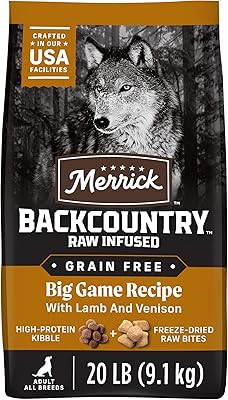
2. Merrick Backcountry Grain-Free (Big Game Venison)
Combines traditional kibble with freeze-dried raw pieces for enhanced palatability and nutrient density. Real deboned venison is the #1 ingredient — the most direct next step up from TOTW’s High Prairie formula. Protein runs higher at ~38% dry matter, with added probiotics and zero grains.
Quick Specs:
- Protein (DM): ~38%
- Key Proteins: Deboned Venison + Freeze-Dried Raw Pieces
- Grain-Free: Yes
- Probiotics: Yes
Who This Is For: TOTW owners wanting a raw-food upgrade without fully switching to freeze-dried meals.
Not Ideal For: Budget-conscious shoppers — Merrick runs ~30% pricier per pound than TOTW.
Check on Amazon
Still available as of 2026 — prices vary, verify current listings

3. Natural Balance L.I.D. Grain-Free (Sweet Potato and Venison)
If TOTW’s PREY line attracted you but you want an even simpler ingredient list, Natural Balance L.I.D. is the answer. Single animal protein (venison), single carbohydrate source (sweet potato), nothing unnecessary. Designed for dogs undergoing food elimination diets where pinpointing an allergen is the primary goal.
Quick Specs:
- Protein (DM): ~22%
- Key Proteins: Venison (single source)
- Grain-Free: Yes
- Ingredients: Minimal (under 10 key ingredients)
Who This Is For: Dogs with confirmed food sensitivities needing a clean, traceable ingredient list for elimination diets.
Not Ideal For: Highly active dogs needing higher protein — L.I.D. runs leaner than TOTW’s grain-free line.
Check on Amazon
Still available as of 2026 — prices vary, verify current listings

4. Open Farm Freeze-Dried Raw
Human-grade, certified humane freeze-dried raw formula with traceable sourcing — every ingredient’s farm is publicly listed on Open Farm’s website. Non-GMO, no antibiotics, no growth hormones. A meaningful step up from TOTW if ingredient transparency and ethical sourcing are priorities.
Quick Specs:
- Protein (DM): ~40%
- Key Proteins: Human-Grade Meats
- Grain-Free: Yes
- Certifications: Certified Humane, Non-GMO
Who This Is For: Owners who prioritize ethical sourcing, full ingredient traceability, and human-grade quality over budget pricing.
Not Ideal For: Budget-conscious shoppers — Open Farm runs significantly higher per pound than TOTW.
Check on Amazon
Still available as of 2026 — prices vary, verify current listings
Bottom Line
Taste of the Wild occupies a defensible middle position: more specific than standard grocery brands, more accessible than boutique raw, and more widely available than most premium alternatives. The 2016 settlement is a documented history lesson in the importance of ingredient transparency — but the brand has operated visibly and at scale since reformulation. For most healthy adult dogs without breed-specific cardiac risks, it’s a reasonable grain-free choice at a fair price. The key is knowing what questions to ask your veterinarian before committing long-term, and monitoring coat quality and stool consistency during the first 30 days on any new formula.

About James Miller
Dog owner from Shanghai. Every article on FurryFriendTips is based on personal research — reading labels, tracking FDA recalls, consulting veterinary professionals, and testing food with my Maltese, Snowy. No sponsorships, no brand deals. Read my full story →
🐾 First-hand experience · Vet fact-checked · Updated weekly