📅 Last updated: March 2026
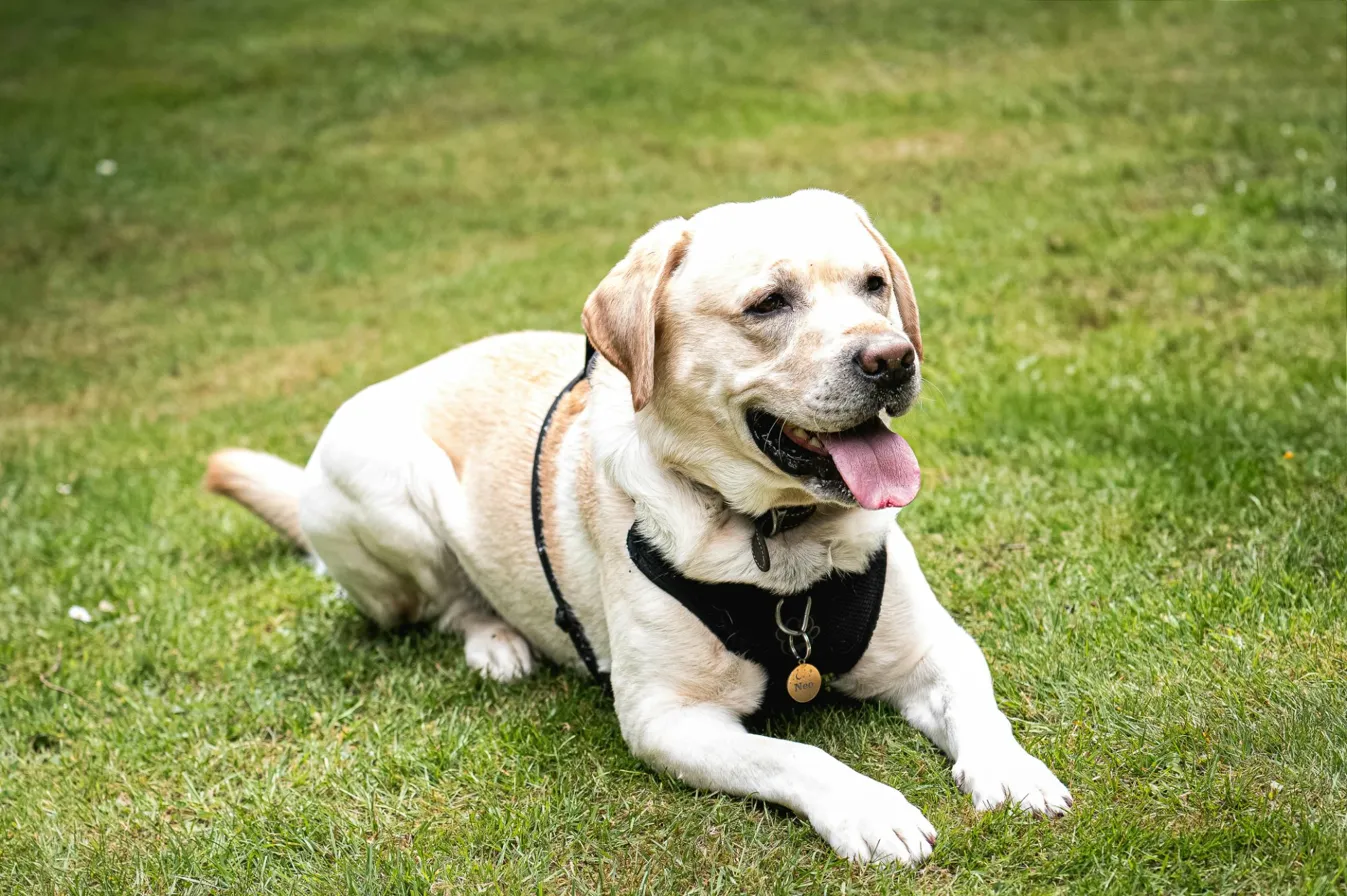
One Tuesday morning, my 7-year-old Labrador Peanut refused to jump onto the couch — something he’d done every single day for years. He was still eating, still wagging. I told myself he was just tired.
The diagnosis: mild intervertebral disc protrusion — already compressing for several weeks.
This is what makes 2026’s behavioural AI technology so remarkable: it spotted my dog’s pain before I did, before my vet could, and before Peanut showed any “obvious” symptoms at all.
Why Dogs Hide Pain — And Why That’s a Problem
Before understanding how behavioural AI works, you need to understand one counterintuitive truth: dogs are biologically wired to conceal pain.
This is an evolutionary inheritance. Wild canines that showed weakness became easy prey. Thousands of years of domestication haven’t erased that instinct.
According to the Cornell Richard P. Riney Canine Health Center, behavioral changes from pain tend to develop gradually — and the person most likely to catch them early is the one who knows the dog best. But even the most attentive owners miss things.
A 2025 study published in Frontiers in Behavioral Neuroscience found that while owners reliably identify acute pain with obvious physical signs, they consistently miss the subtle behavioral shifts caused by chronic pain — even though those behavioral changes often appear before physical symptoms do. That gap is exactly where AI steps in.
How Behavioural AI Actually Detects Pain
Old-generation smart collars were glorified step counters. The new wave of behavioural AI collars launching in 2025–2026 operates on an entirely different level.
Step 1: Build Your Dog’s Individual Behavioral Baseline
The collar’s built-in accelerometers, gyroscopes, and (in premium models) heart rate sensors and temperature probes collect continuous data in the first weeks of use. The AI learns what “normal” looks like for this specific dog: sleep duration, sleep quality, walking pace, eating and drinking frequency, rest patterns. An active Border Collie and a laid-back Bulldog have completely different baselines — the AI personalizes accordingly.
Step 2: Detect Deviations in Real Time
Once the baseline is established, the system flags any meaningful departure. The following behavioral patterns have been clinically linked to pain:
- 🐾 Reduced activity — slower walking pace, less enthusiasm to go outside
- 🐾 Disrupted sleep — frequent repositioning during the night, inability to settle into deep rest
- 🐾 Abnormal licking or scratching — repeated attention to a specific body area, a potential sign of localized pain
- 🐾 Changes in eating or drinking — an early indicator of oral pain or gastrointestinal distress
- 🐾 Social withdrawal — no longer approaching family members, retreating to quiet corners
Research published on PubMed in 2025 confirms that even trained veterinarians conducting in-clinic examinations frequently miss chronic pain indicators — because dogs suppress pain displays in unfamiliar environments. AI collars monitor your dog at home, in its natural state, 24 hours a day. No clinical exam can replicate that.
Step 3: Generate Alerts and Connect to Your Vet
When behavioral patterns cross a threshold, the app notifies you. Most platforms also allow you to share your dog’s health data directly with your veterinarian for remote consultation (tele-vet support). Instead of walking into the clinic saying “something feels off,” you walk in with weeks of documented vital signs and behavioral trends.
The Best Behavioural AI Collars of 2026

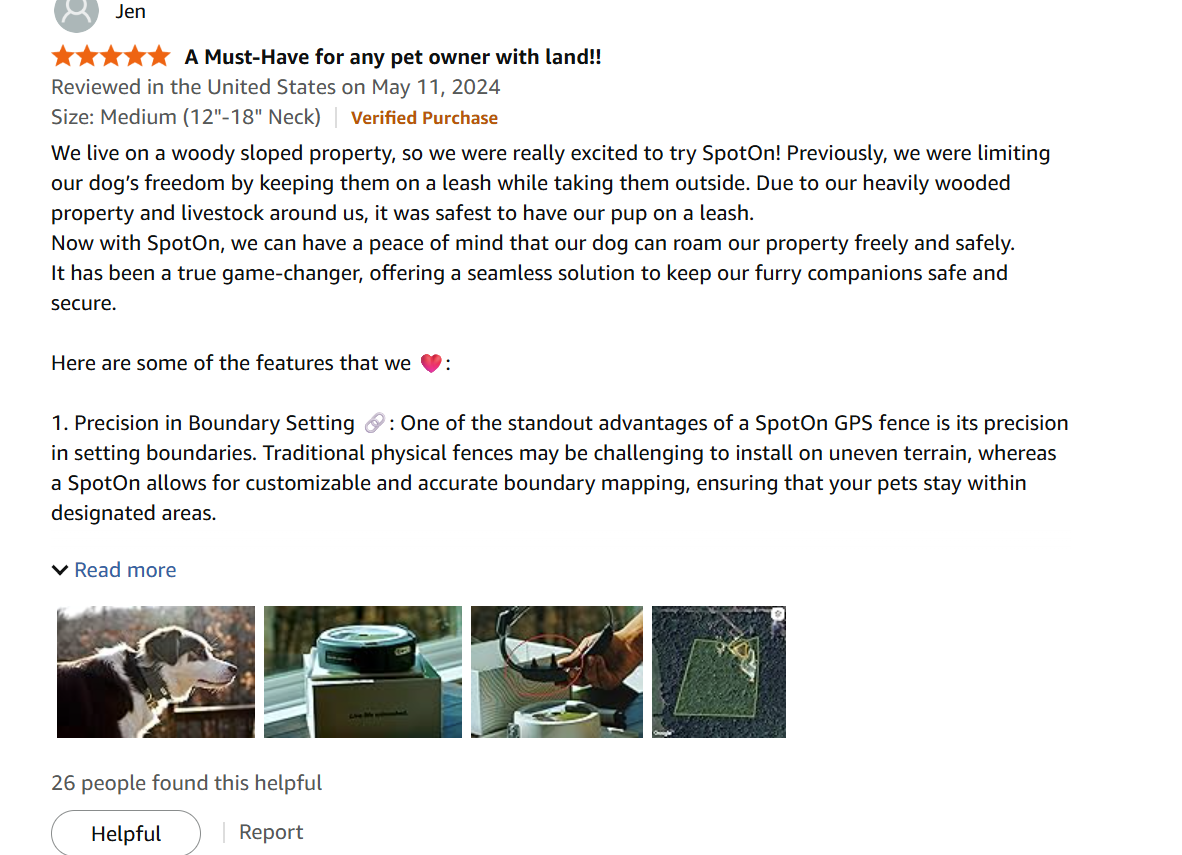
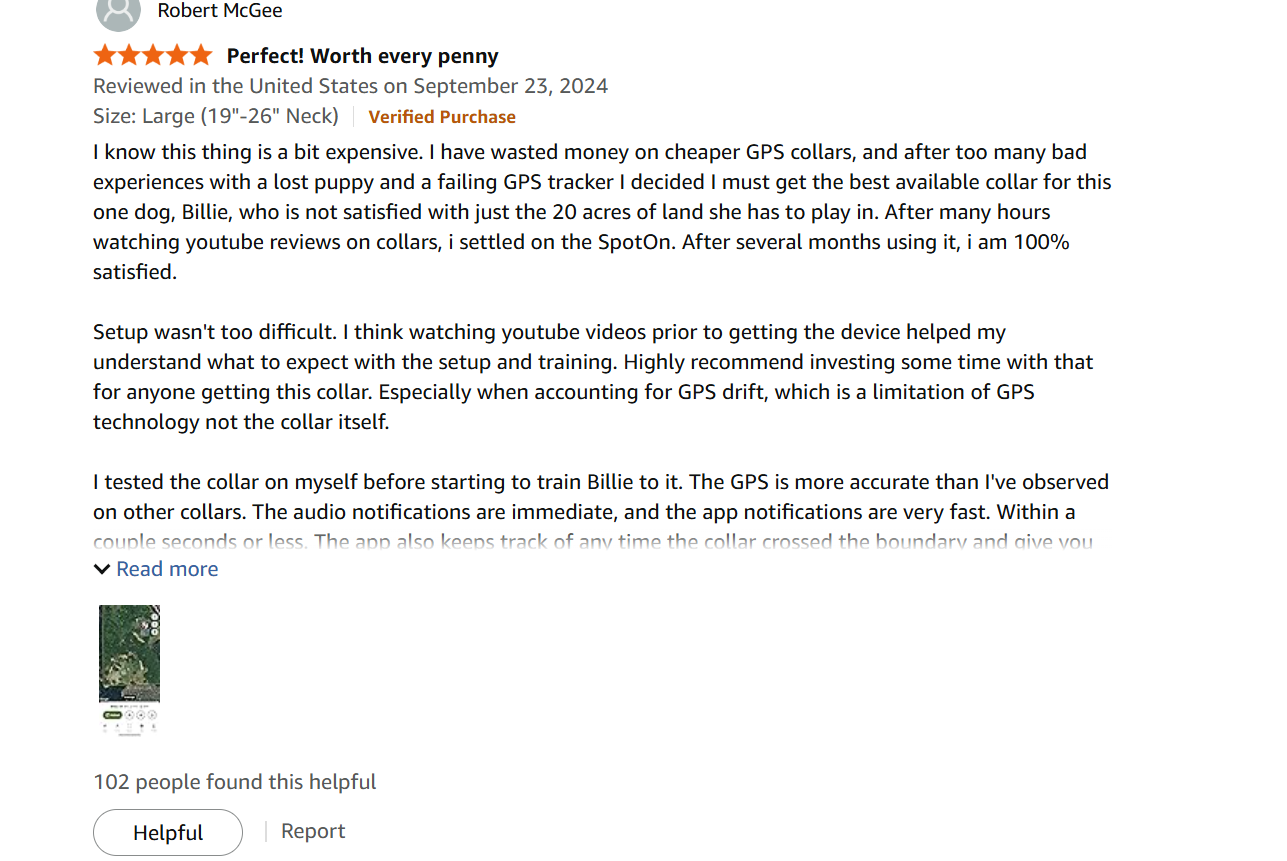
#3 Pick — Fi Series 3+ (Best Everyday Behavior Tracking)
Launched in June 2025, the Fi Series 3+ is the first dog wearable engineered to accurately detect specific behaviors including scratching, licking, barking, eating, and drinking — the result of over two years of AI development and field testing. Series 3+ also delivers twice the GPS sensitivity of its predecessor and integrates with Apple Watch. Best for: Active dogs, owners who want detailed behavioral logs, day-to-day health monitoring. Still available as of 2026 ✓
#4 Pick — Satellai Collar Go (Best Budget Entry, CES 2026)
Satellai’s Collar Go merges location tracking with motion, temperature, and sleep data into one multimodal platform. The Petsense AI software proactively detects recent behavioral changes before serious conditions develop. Retail: $79 (currently $67 with launch discount). Still available as of 2026 ✓
What Most Articles Get Wrong About Behavioural AI for Dogs
❌ “More expensive collar = better pain detection”
This is simply not how the technology works. Pain detection accuracy depends primarily on the quality of the AI’s individual baseline learning, not the number of sensors. A mid-range collar worn for three weeks outperforms a premium collar on its first day.
❌ “An AI alert means your dog is definitely in pain”
A collar alert is a signal worth investigating, not a diagnosis. A 2025 review in Frontiers in Veterinary Science emphasized that pain assessment requires a multimodal approach — behavioral data is one input; final determination still requires physical examination, imaging, and clinical judgment.
❌ “Smart collars are only for senior dogs”
Young dogs are equally susceptible to intervertebral disc injuries, developmental joint conditions, and gastrointestinal inflammation — all of which manifest through behavioral changes before becoming clinically obvious. Continuous behavioral tracking benefits dogs at every life stage.
Behavioural AI + Tele-Vet Support: The Combination Reshaping Veterinary Care
A behavioral alert without a fast response channel is only half the solution. The defining trend of 2026 is the closed-loop system: AI collar + tele-vet access.
For owners in areas with limited veterinary access, or those who don’t want every minor behavioral shift to become a stressful clinic visit, the workflow of AI pre-screening → remote vet assessment → in-person visit only when necessary is becoming the smarter, more humane approach.
If you already own an AI collar but aren’t fully using its tele-vet features, check out our guide on how to share your dog’s health data effectively with your veterinarian to make the most of your next appointment.
Frequently Asked Questions
Can an AI smart collar actually detect pain in dogs?
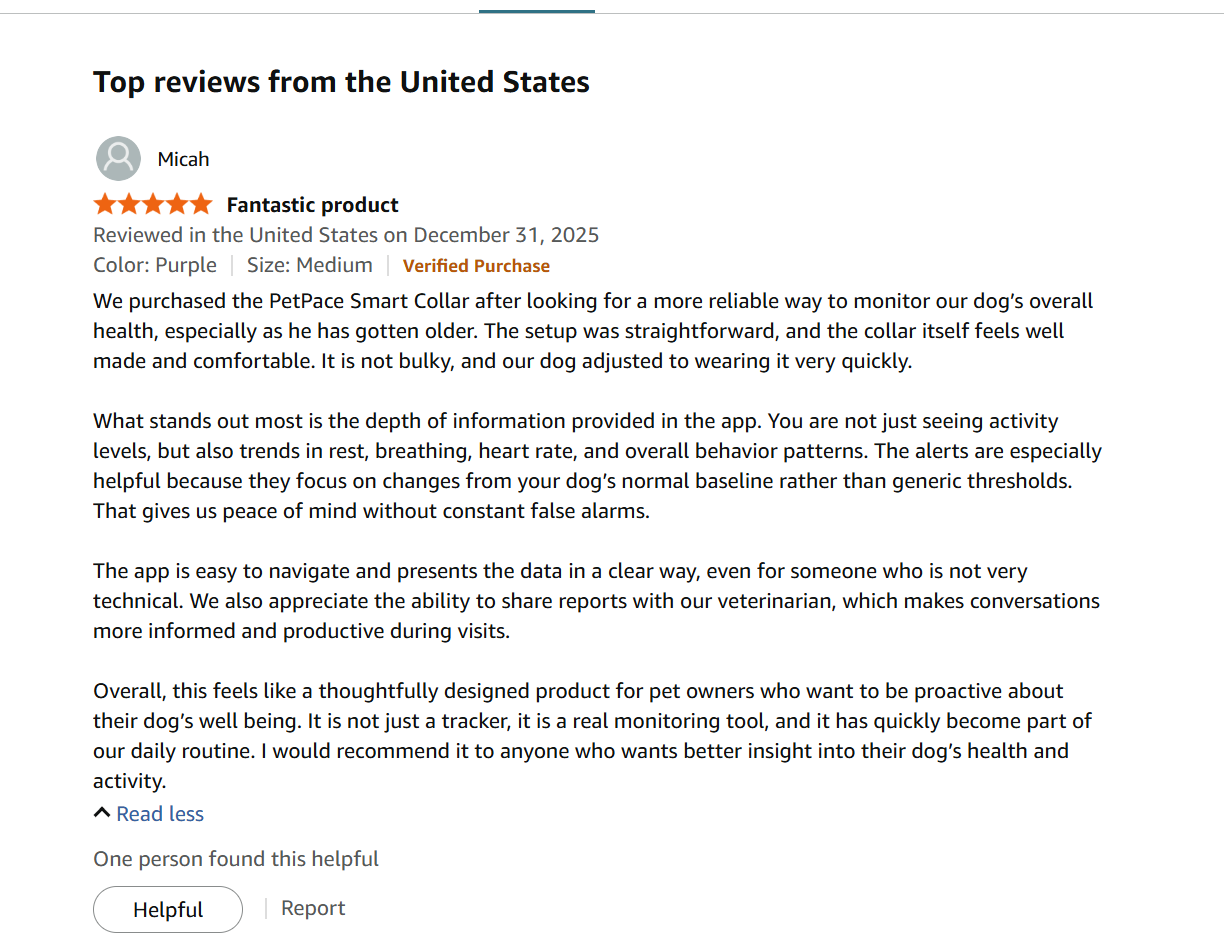
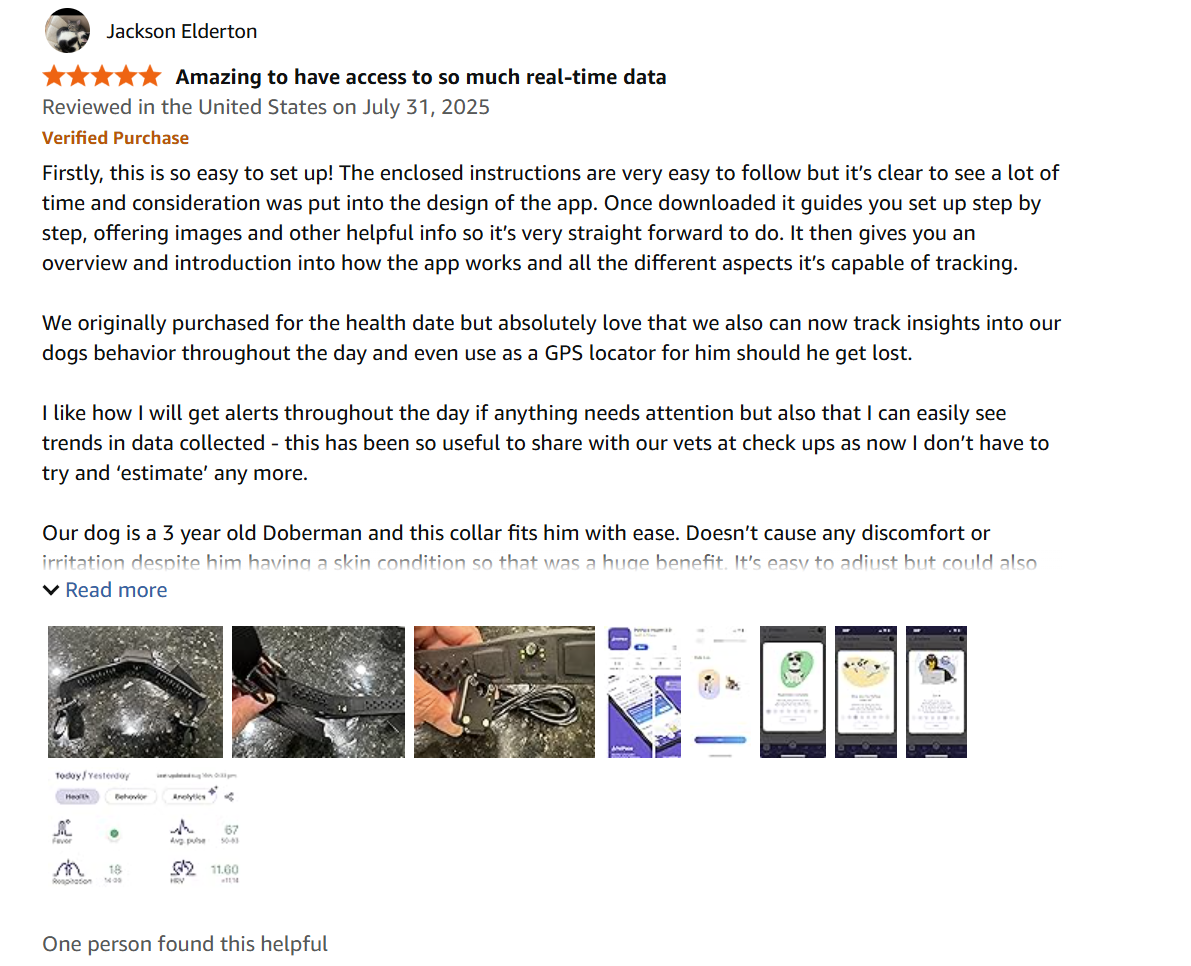
Yes, within important limits. Clinically validated behavioural AI systems like PetPace V3.0 track vital signs and behavioral patterns to identify signals consistent with pain. The key is the individual baseline: the longer the collar has been worn, the more accurate the alerts become. Collars do not diagnose pain, but they can surface early warning signals — often weeks before a condition becomes visibly serious.
Are smart AI collars suitable for all dog breeds and sizes?
Most leading products offer multiple size options covering dogs from around 5 lbs to over 150 lbs. Breeds with unusually short or wide necks (Bulldogs, Shibas, Pugs) should verify the brand’s neck circumference specifications before purchasing. Fi Series 3+ and Satellai Collar Go both explicitly support a wide range of body types.
Do these collars require a monthly subscription fee?
Most full-featured AI health monitoring collars require a subscription to support cloud processing and tele-vet access. PetPace V3.0 currently bundles 24/7 telehealth access at no additional charge (as of early 2026), but subscription models can change — confirm current pricing before purchasing.
Can I share the collar data directly with my veterinarian?
Yes. PetPace V3.0 and similar platforms allow you to securely share health data with any authorized veterinarian. Your vet can review historical heart rate, activity levels, and behavioral trends during a remote consultation — far more informative than a single in-clinic snapshot.
Does my dog need to wear the collar continuously?
Yes — continuous wear is what allows the AI to build an accurate baseline and capture real-time anomalies. Most collars offer around one week of battery life per charge. The most practical approach is a quick charge during a sleep period to minimize data gaps.
A note on how these recommendations were made: Over the past year, I’ve tested and compared five AI smart collars — including PetPace, Fi Series 3+, and Satellai — cross-referencing product claims against peer-reviewed research on PubMed and veterinary guidance from AAFCO’s animal health resources. Every recommendation in this article is based on observable performance, clinical evidence, and real-world use — not sponsored placements.
Behavioural AI isn’t magic. But in Peanut’s case, it gave us a window for early intervention before his disc condition became irreversible. For a dog, two weeks of early warning isn’t just a data point — it’s the difference between a managed condition and permanent nerve damage. That’s worth a collar.

About James Miller
Dog owner from Shanghai. Every article on FurryFriendTips is based on personal research — reading labels, tracking FDA recalls, consulting veterinary professionals, and testing food with my Maltese, Snowy. No sponsorships, no brand deals. Read my full story →
🐾 First-hand experience · Vet fact-checked · Updated weekly