The phrase “human-grade” appears on pet food packaging, in Instagram ads, and across brand websites — and most of the time, it’s being used illegally. That’s not an exaggeration. The FDA has a specific standard for what qualifies as human-grade, and the majority of brands claiming it don’t come close to meeting it.
This guide exists because the confusion is deliberately manufactured. Brands benefit financially from the ambiguity. Understanding the actual legal line — and which products are on which side of it — takes about 10 minutes and changes how you read every pet food label you’ll ever see again.
Disclosure: As an Amazon Associate, we may earn a small commission from qualifying purchases at no extra cost to you.
The Legal Definition Most Brands Hope You Don’t Know
Under FDA guidelines, a dog food can only be called “human-grade” if the entire product — not just the ingredients — is manufactured, packed, and held in a facility that meets human food regulations. This is called the “edible” standard under 21 CFR. The distinction is not about ingredient quality. It’s about the facility.
Here’s the gap brands exploit: a company can source cage-free chicken that meets human food quality standards, then process it in a feed-grade facility that does not meet those standards, and still call their product “made with human-grade ingredients.” That phrase — made with human-grade ingredients — is very different from the food itself being human-grade. One is a marketing claim. The other is a regulatory classification.
The Association of American Feed Control Officials (AAFCO) does not formally define “human-grade” — which is exactly why brands use it so freely. In the absence of a clear AAFCO definition, brands have migrated toward increasingly creative phrasing: “human-quality,” “human-grade inspired,” “restaurant-quality,” “fit for human consumption.” None of these phrases have regulatory meaning. They are designed to sound like the FDA standard without being subject to it.
Phrases that sound like “human-grade” but aren’t:
- “Made with human-grade ingredients” — refers to ingredient sourcing only, not facility standard
- “Human-quality” — not an FDA term, no regulatory meaning
- “Restaurant-quality” — marketing language with no legal definition
- “Fit for human consumption” — this phrase has specific legal meaning but is frequently misused
- “Human-grade inspired” — not a thing; exists only in copywriting
The only phrase that carries legal weight: “manufactured in a human food facility” or direct reference to FDA 21 CFR edible standard compliance.
Which Brands Are Actually Misusing the Term
We won’t name every brand in the space, but the pattern is consistent: most direct-to-consumer fresh dog food brands — subscription services that deliver refrigerated food in portioned pouches — claim human-grade in marketing materials while being manufactured in USDA-inspected but not FDA human food-registered facilities. Some brands have resolved these claims over time when challenged; others continue to use the language.
The test is simple: ask whether the brand discloses that their food is manufactured in an FDA-registered human food facility. If the answer involves language like “we use human-grade ingredients” or “our standards exceed human-grade quality,” that’s not a yes. A yes sounds like: “Our food is manufactured at [facility name], which is FDA-registered under 21 CFR Part 117 for human food production.”
The Three Products Worth Talking About
We’re covering three products in this guide — deliberately not eight, not twelve. There is one genuinely human-grade dog food available to most consumers. One brand that represents the honest alternative when full FDA facility compliance isn’t available but supply chain integrity matters. And one option for the majority of owners who want cleaner ingredients without a $130 bag.
| Product | Rating | Price | FDA Human-Grade Facility | |
|---|---|---|---|---|
| The Honest Kitchen Dehydrated | 4.6 / 5 | $128.24 | ✓ Yes — verified | Check Price |
| Open Farm Freeze-Dried Raw | 4.5 / 5 | $93.99 | ✗ No — but traceable sourcing | Check Price |
| Nutro So Simple Natural | 4.5 / 5 | $75.96 | ✗ No — not human-grade | Check Price |
The Honest Kitchen — The Only One That Actually Qualifies

Rating: ⭐ 4.6/5 | $128.24 | View on Amazon
The Honest Kitchen has been manufacturing dog food in an FDA human food facility since 2002. This is not a recent rebrand or a marketing pivot — it’s been the company’s model since founding, when founder Lucy Postins made her dogs food in her kitchen using the same standards she applied to her own meals. The FDA registration is public and verifiable. This is, as far as mainstream dog food goes, the real thing.
The format is dehydrated, which is worth understanding before you assume it’s like kibble or freeze-dried. Dehydration removes moisture at low temperatures — low enough to preserve heat-sensitive enzymes and amino acids that high-heat extrusion destroys. You add warm water before serving: one pound of dehydrated food becomes four pounds of fresh-smelling, soft, visually appealing food. For dogs that have been reluctant eaters, the change in response is often immediate and somewhat embarrassing — you may discover your dog was never picky, they just wanted food that smelled like food.
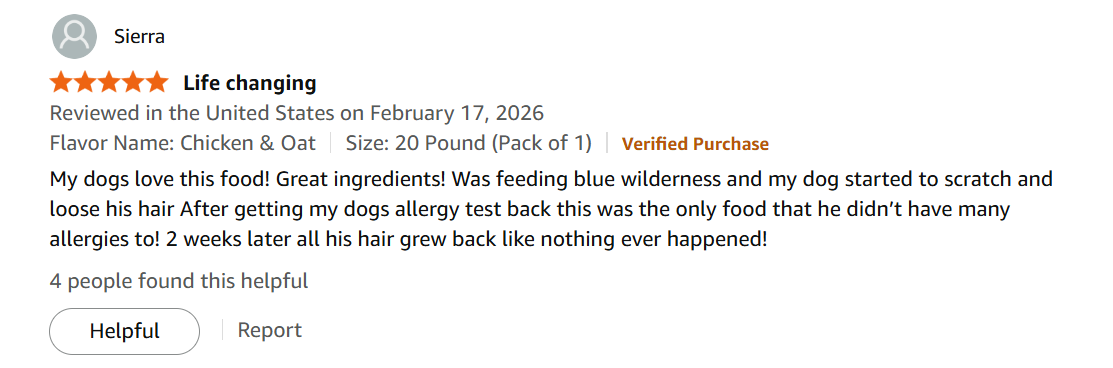
The per-serving math is better than the $128.24 sticker price suggests. A 10 lb box yields 40 lbs of rehydrated food — roughly $3.20 per pound of finished food. For context, a comparable fresh-food subscription service often costs $8–12 per pound delivered. The preparation overhead is real: three minutes per meal is genuinely more effort than scooping kibble, and some households won’t find this sustainable long-term. That’s a legitimate consideration, not a minor caveat.
| What works | What to know before buying |
|---|---|
| FDA human food facility manufacturing — only brand with this 4x rehydration yield — per-serving cost is better than it looks Cage-free / grass-fed proteins, Non-GMO, no corn soy wheat Extremely high palatability — works especially well for picky dogs Can be used as a topper (not just primary diet) |
Requires prep — not for households that need zero-effort feeding High sticker price before calculating yield Dogs often refuse to go back to kibble after switching Use within 5 days once rehydrated (refrigerate) Some recipes contain legumes — check individual formula |
The honest summary: If FDA facility verification is your standard for “human-grade,” The Honest Kitchen is the only mainstream option that meets it. The cost and prep requirement are real trade-offs; the nutrition quality and palatability difference versus kibble are also real.
Open Farm — When Where It Comes From Matters More Than the Facility Label

Rating: ⭐ 4.5/5 | $93.99 | View on Amazon
Open Farm doesn’t meet the FDA human-grade facility standard. That’s worth saying plainly before anything else, because it’s easy to read their website and come away thinking otherwise. What Open Farm does better than nearly any other pet food brand is document where the ingredients came from. Their farm-to-bowl traceability system lets you enter a lot code and trace the protein back to the specific farm and certification. That’s not a marketing claim — it’s a supply chain audit tool, and it’s genuinely unusual in this industry.
The freeze-dried raw formula is grain-free and — more importantly — legume-free, which matters for owners who’ve been following the FDA’s ongoing DCM investigation. High legume diets (peas, lentils, chickpeas as primary ingredients) were flagged as a potential factor in dilated cardiomyopathy in dogs. Open Farm’s formula avoids this problem. The protein sources are Certified Humane and GAP-certified — not self-certified, but third-party audited by independent organizations.
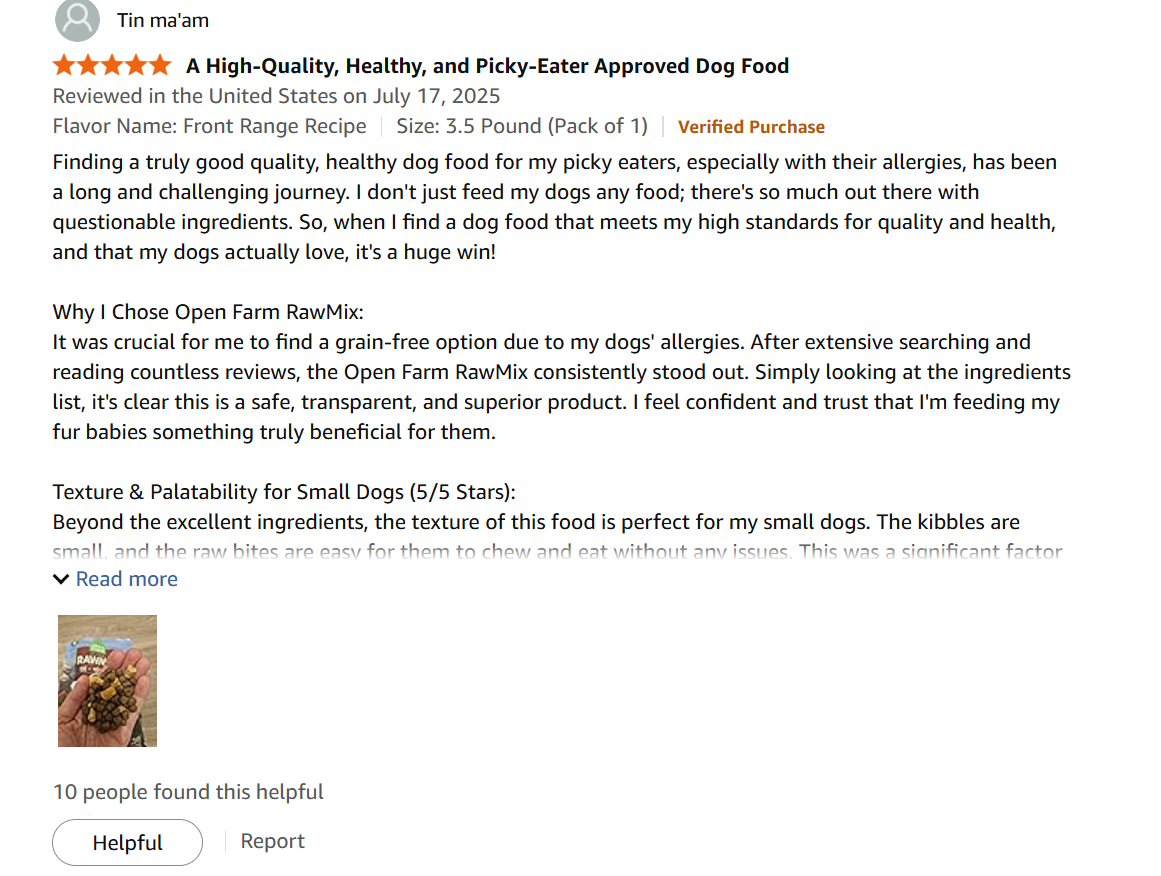
At $93.99, Open Farm costs less than The Honest Kitchen but more than any conventional kibble. The question to ask: is sourcing traceability worth a premium over a clean kibble? For some owners — particularly those who’ve lived through pet food recalls, or who have a dog with chronic issues they’re trying to isolate — the answer is yes. Open Farm has had zero recalls. Their lot code traceability also means that if something were to go wrong, they could pinpoint the source faster than any brand that doesn’t track at this level.
| What works | What to know before buying |
|---|---|
| Lot code traceable to source farm — genuine supply chain transparency Certified Humane + GAP welfare (independent third-party, not self-certified) Legume-free formula — relevant for DCM-conscious owners No antibiotics, growth hormones, or artificial additives Zero recalls in brand history |
Not manufactured in FDA human food facility $93.99 — significant for primary diet use Fewer recipe options than Honest Kitchen Freeze-dried format requires rehydration or crumbling — some dogs prefer one over the other |
The honest summary: Open Farm isn’t human-grade by the FDA definition, and they’re clear about that. What they offer instead is exceptional supply chain accountability — arguably more useful to an owner trying to prevent problems than a facility certification alone. Best choice when you care more about ingredient origin than processing standard.
Nutro So Simple — Not Human-Grade, But the Most Honest Kibble on This List
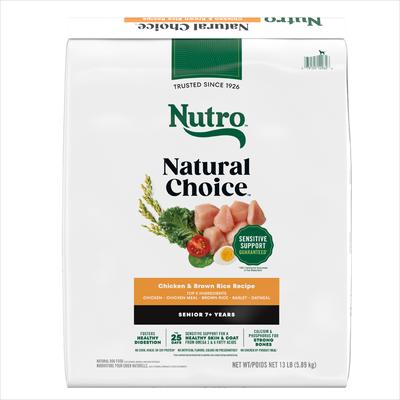
Rating: ⭐ 4.5/5 | $75.96 | View on Amazon
Nutro So Simple is kibble. It doesn’t claim to be human-grade — and that honesty is part of why it’s on this list. While other brands in the $70–80 range dress their conventional dry food in human-grade language it doesn’t earn, Nutro’s “So Simple” line is transparent about what it is: clean-ingredient, Non-GMO verified kibble with 10 ingredients or fewer. For a conventional format, that’s a meaningful standard.
Ten ingredients. That’s the whole pitch, and it delivers on it: farm-raised chicken, chicken meal, whole grain brown rice, split peas, pea starch, tomato pomace, chicken fat, flaxseed, natural flavor, mixed tocopherols. No corn, no wheat, no soy, no artificial colors or preservatives, no by-product meal, no mystery “meat and bone meal.” For dogs with sensitivities, a 10-ingredient label is diagnostic gold — if a dog reacts, there are only 10 things to eliminate, not 40.
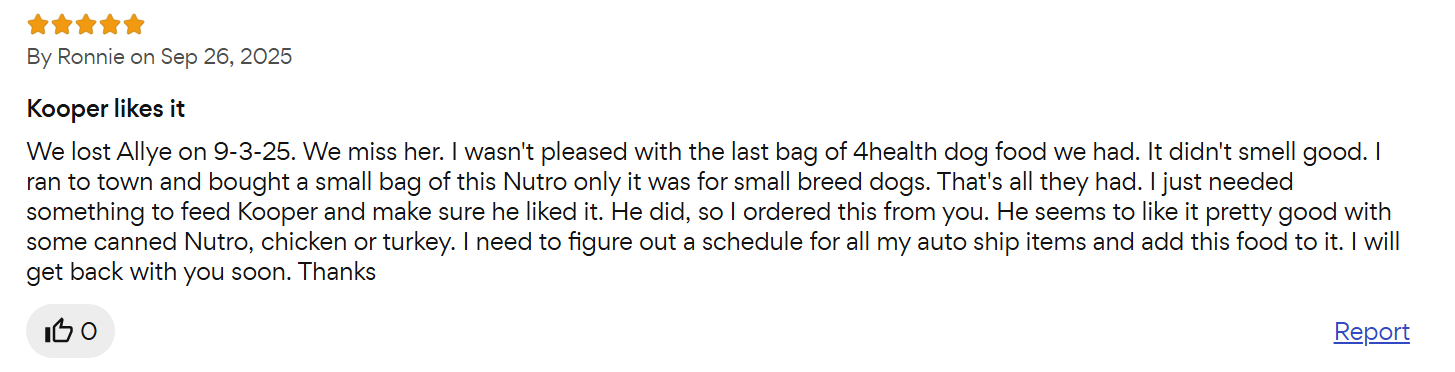
What Nutro So Simple cannot offer: the nutrient bioavailability of dehydrated or freeze-dried food. Extrusion — the process of forcing wet meal through a die at high pressure and temperature — creates kibble shapes but also destroys heat-sensitive compounds. Synthetic vitamins are added back to compensate, which works well but isn’t the same as intact natural nutrition. If you’re reading this guide because you want the most nutritionally complete option possible, this isn’t it. It’s included because most owners are making trade-offs between cost, convenience, and ingredient quality — and for that balance, Nutro So Simple is better than most of what’s available at its price point.
| What works | What to know before buying |
|---|---|
| Non-GMO Project Verified (third-party certified) 10 ingredients or fewer — genuinely readable label No by-products, corn, wheat, soy, artificial additives Ideal for food sensitivity elimination diets Most accessible price point on this list ($75.96) |
Still extruded kibble — high-heat processing applies Not human-grade by FDA facility standard (doesn’t claim to be) Lower protein density than Honest Kitchen or Open Farm Contains peas — a consideration for DCM-aware owners |
The honest summary: Nutro So Simple is the most credible clean-label kibble at this price point. It’s not in the same category as The Honest Kitchen or Open Farm in terms of processing standard — but it’s also not pretending to be. For owners who need conventional kibble convenience but want to move away from heavily processed, 40-ingredient formulas, this is the most defensible choice.
Is Any of This Worth the Price?
The honest answer depends on which dog you have. For a healthy five-year-old dog with no persistent health issues, eating a well-formulated premium kibble and doing well on it — the marginal benefit of switching to genuinely human-grade food is real but not dramatic. You’re likely to see some improvement in coat quality and digestion, and the food safety risk profile is slightly better. Whether that’s worth 3x the cost of good kibble is a personal decision, not a nutritional mandate.
The case gets much stronger in three specific scenarios: a dog with chronic digestive issues that haven’t been resolved by switching kibble brands, a dog with persistent skin and coat problems despite normal allergy testing, or a picky eater who won’t maintain a healthy weight on conventional food. These dogs often respond noticeably to whole-food minimally processed diets — not always, but often enough that the trial is worth running for 4–8 weeks.
A practical middle ground: use The Honest Kitchen or Open Farm as a 20–30% topper over your dog’s existing kibble. The palatability improvement is immediate. The incremental nutrition benefit is real. The monthly cost premium drops from $100+ to roughly $25–35. Many owners find this the most sustainable entry point — and some of those dogs end up doing so well that transitioning to full human-grade food eventually makes financial sense.
| Brand | Format | FDA Facility | Non-GMO Certified | Recall History | Est. Monthly Cost (50 lb dog) |
|---|---|---|---|---|---|
| Honest Kitchen | Dehydrated | ✓ Yes | ✓ | None | ~$100–140 |
| Open Farm | Freeze-dried | ✗ No | ✓ | None | ~$120–160 |
| Nutro So Simple | Dry kibble | ✗ No | ✓ Verified | None | ~$60–80 |
Common Questions
Why do so many brands claim “human-grade” if they don’t qualify?
Because AAFCO doesn’t formally define the term, and FDA enforcement in pet food marketing has historically been limited to egregious cases. The burden on the brand is low and the marketing benefit is high. Until regulators create a formal pet food labeling standard for “human-grade,” the phrase will continue to be used freely by brands that don’t meet the FDA human food facility standard.
Is dehydrated food better than freeze-dried?
Different, not categorically better or worse. Dehydration uses low heat, which preserves enzymes and texture but applies more thermal processing than freeze-drying. Freeze-drying uses cold vacuum pressure to remove moisture without heat, preserving the maximum amount of raw nutritional integrity. Both formats are minimally processed compared to kibble. Honest Kitchen is dehydrated; Open Farm is freeze-dried — if maximum raw nutrient preservation is the goal, Open Farm has the edge on processing method even though Honest Kitchen wins on facility standard.
My dog already eats high-quality kibble. Is switching worth it?
If your dog is thriving — healthy coat, good digestion, maintaining weight, interested in food — a switch primarily benefits you psychologically rather than them nutritionally. Dogs have been living long, healthy lives on well-formulated kibble for decades. If you want to improve their diet incrementally, use one of these products as a 20–30% topper before committing to a full switch. The difference in palatability alone will be immediately visible.
How do I transition without causing digestive upset?
Gradually — over 10 days minimum, 14 for dogs with sensitive digestion. Start at 75% current food / 25% new food, adjust every 2–3 days. With The Honest Kitchen specifically: start with a small rehydrated portion mixed into current food, and watch for dogs eating too fast — the aroma and texture are novel and some dogs inhale it. A slow feeder bowl helps.
Can I verify The Honest Kitchen’s human-grade claim myself?
Yes. The Honest Kitchen discloses their manufacturing facility publicly and references their FDA human food facility registration on their website. You can also cross-reference with FDA food facility registration databases. This is what separates their claim from most other brands’ — it’s not self-certified marketing language, it’s a verifiable regulatory status.
For dogs with digestive issues where ingredient quality and processing standard are primary concerns, also see our sensitive stomach dog food guide. For a broader look at minimally processed formats including freeze-dried raw options across more brands, see the freeze-dried raw dog food comparison.
Last updated: April 2026. Verify current ingredient formulations directly with manufacturers. Consult your veterinarian before significant dietary changes, particularly for dogs with existing health conditions.

About James Miller
Dog owner from Shanghai. Every article on FurryFriendTips is based on personal research — reading labels, tracking FDA recalls, consulting veterinary professionals, and testing food with my Maltese, Snowy. No sponsorships, no brand deals. Read my full story →
🐾 First-hand experience · Vet fact-checked · Updated weekly