Disclosure: FurryFriendTips may earn a commission if you purchase through links on this page, at no extra cost to you. Recommendations are based on independent nutritional analysis and are not influenced by affiliate agreements.
Who This Guide Is For
Dog owners considering a premium dog food upgrade who want to understand whether the higher price tag translates into measurably better nutrition — or just better marketing. This guide breaks down six premium formulas across three price tiers, analyzing what each actually delivers per dollar spent, so the decision is based on data rather than packaging design.
The word “premium” appears on more dog food packaging in 2026 than ever before. The problem is that the term has no regulatory definition — any brand can print it on a bag. Some products labeled premium contain the same basic ingredient structures as supermarket staples with a higher price tag and a glossier design. Others genuinely invest in better sourcing, higher meat inclusion, and more rigorous quality control. The difference matters, and it shows up in your dog’s coat quality, digestion, and long-term health.
This guide evaluates six dog foods that legitimately qualify as premium — selected based on ingredient quality, nutritional density, manufacturing standards, and verified owner feedback. Each was assessed against the same criteria: protein source transparency, fat-to-protein ratio, carbohydrate quality, and whether the cost is justified by what’s actually in the bag.
For a broader look at all dog food types — dry, freeze-dried, air-dried, and fresh — see the complete 2026 Dog Food Guide.
What “Premium” Actually Means — And What It Doesn’t
In the dog food industry, “premium” generally signals one or more of the following: named whole proteins as the first ingredient, exclusion of corn/wheat/soy fillers, higher animal-ingredient percentages, and more transparent sourcing practices. These are meaningful differentiators — but only when they’re genuine. A bag that lists “chicken” first but pads the formula with pea protein isolate and rice flour is technically using a named protein, yet the overall nutritional profile may not be meaningfully better than a standard grocery-store kibble.
What to look for on any premium label:
- First ingredient is a named whole protein — “Deboned chicken,” “wild-caught salmon,” or “ranch-raised lamb.” Not “chicken meal” or “poultry by-product.”
- Fat-to-protein ratio below 60% — higher ratios indicate the formula is using carbohydrate-heavy fillers to hit its protein percentage.
- No artificial preservatives, colors, or flavors — this should be table stakes at the premium level.
- Named carbohydrate sources — brown rice, barley, sweet potato, oatmeal. Not “grain products” or generic fillers.
- AAFCO compliance statement — ideally through feeding trials, not just formulation method.
Quick Comparison: Best Premium Dog Food 2026
| # | Product | Price Tier | Key Strength | Where to Buy |
|---|---|---|---|---|
| 1 | Orijen Amazing Grains | LUXURY | 85% animal ingredients, 43% protein DM | Chewy · Amazon |
| 2 | Farmina N&D Pumpkin Lamb | LUXURY | Italian-made, pumpkin + ancient grains | Chewy · Amazon |
| 3 | Annamaet Original Ultra | LUXURY | Family-owned 30+ years, 32% protein | Amazon |
| 4 | Instinct Raw Boost | UPPER-MID | Kibble + freeze-dried raw pieces | Chewy · Amazon |
| 5 | Hill’s Science Diet | UPPER-MID | AAFCO feeding trial validated | Chewy · Amazon |
| 6 | Blue Buffalo Life Protection | SMART MONEY | Best value with real chicken first | Chewy · Amazon |
Prices fluctuate — verify current listings before purchasing.
LUXURY TIER $110+ Per Bag
The highest meat inclusion ratios, most transparent sourcing, and strongest nutritional profiles. These formulas justify their price through ingredient quality that’s genuinely difficult to replicate at lower price points.
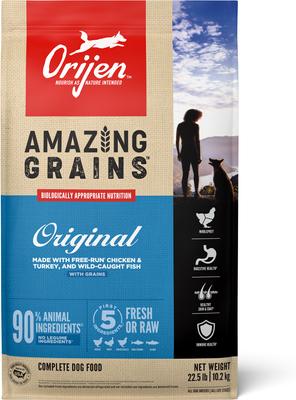
1. Orijen Amazing Grains
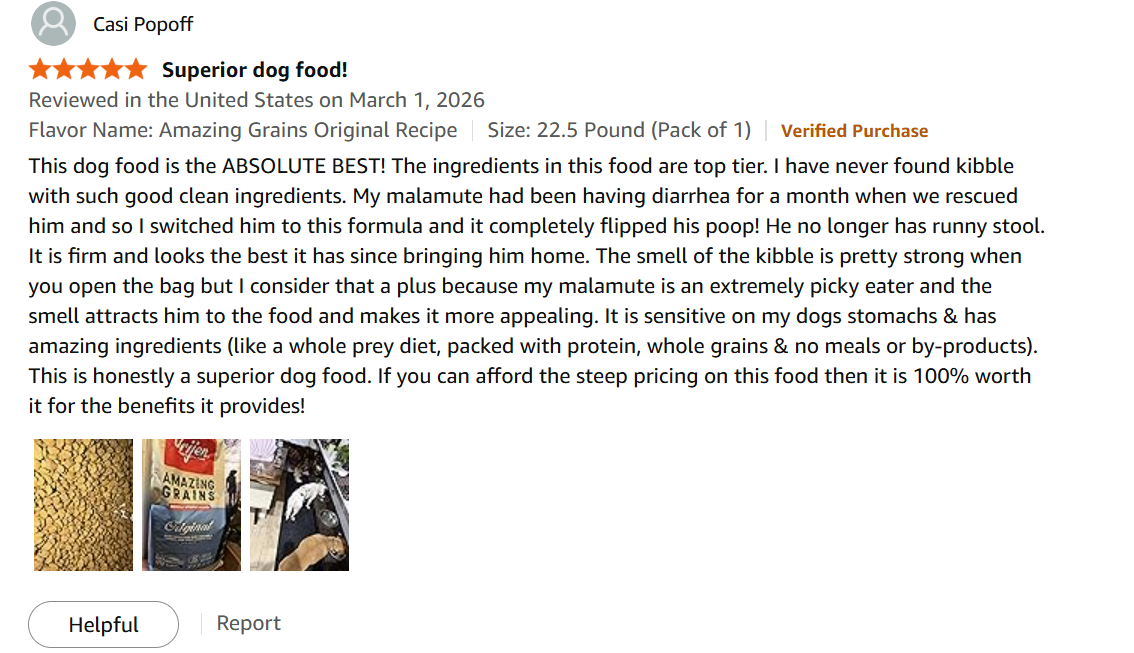
Orijen’s 85% animal ingredient ratio isn’t marketing language — it’s reflected in the guaranteed analysis and confirmed by the absence of synthetic amino acid boosters, which several competitors use to inflate protein percentages without adding real meat. The whole-prey approach (muscle, organs, cartilage, bone in natural proportions) provides amino acid diversity that single-source protein formulas cannot match. At 43% dry-matter protein and a fat-to-protein ratio around 49%, this is one of the most nutritionally dense kibbles available in 2026.
The one meaningful caveat: Orijen uses the AAFCO formulation method rather than feeding trial validation. At this price point, feeding trial data would add confidence. It’s not a disqualifier — the nutritional profile is strong — but it’s a transparency gap worth noting.
Prices vary — verify current listings.

2. Farmina Natural & Delicious Pumpkin — Lamb & Blueberry
Farmina is one of the few premium European brands with substantial availability in the US market, and their N&D line deserves the attention it’s getting. The pumpkin and ancient grain inclusion isn’t just a trend — it provides digestible fiber and prebiotic support without relying on legumes, which have been scrutinized in the ongoing grain-free DCM discussion. Lamb as the primary protein makes this a functional option for dogs with chicken sensitivities.
At $116.42, it sits at the same price point as Orijen but offers a different nutritional philosophy: Mediterranean-inspired ingredients (dehydrated pumpkin, blueberry, orange), grain-free formulation, and a slightly lower protein percentage that’s nonetheless well within the premium range. The trade-off is lower name recognition among US dog owners compared to Orijen or Blue Buffalo — but the quality is legitimate.
Prices vary — verify current listings.

3. Annamaet Original Ultra Formula
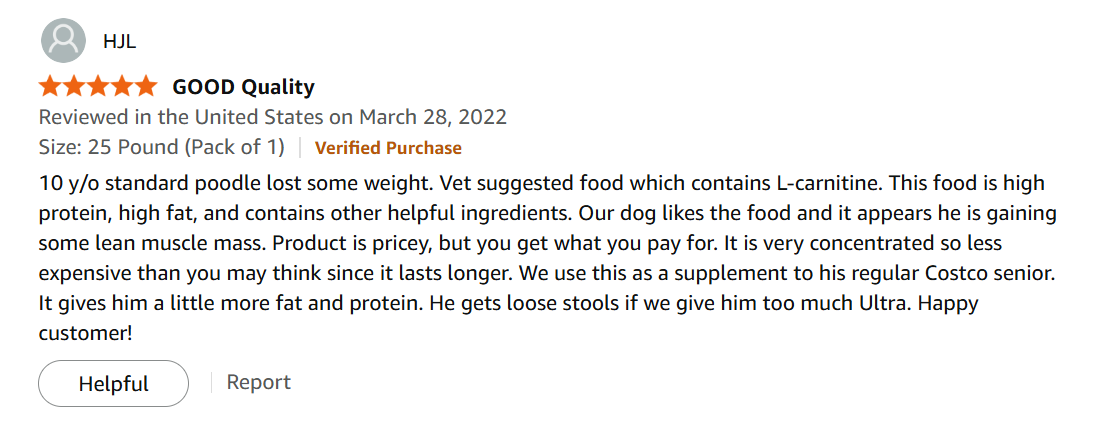
Annamaet is the kind of brand that premium dog food enthusiasts recommend to each other but the general public rarely encounters. Family-owned for over 30 years, the Pennsylvania-based company uses small-batch artisanal production with a slow-cook process that preserves heat-sensitive nutrients better than standard high-speed extrusion. The Original Ultra formula delivers 32% protein from antibiotic-free chicken and herring meal — the fish inclusion provides natural omega-3 fatty acids without supplementation.
At $134.99 for a 40-lb bag, this is the most expensive option per review. The justification: proteinated (chelated) minerals for better absorption, L-Carnitine for fat metabolism and lean body mass maintenance, and a sustainability commitment that includes biodegradable packaging. This is a food designed by and for serious nutrition enthusiasts — not the mass market.
Available at: Amazon
Prices vary — verify current listings.
UPPER-MID TIER $95–$110 Per Bag
Strong nutritional profiles at a more accessible price point. These formulas compete with the luxury tier on ingredient quality while offering better value through efficient manufacturing and wider distribution.
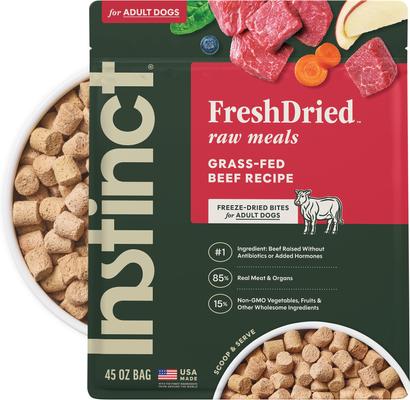
4. Instinct Raw Boost — Chicken
Instinct’s Raw Boost line occupies a useful middle ground: cage-free chicken kibble combined with freeze-dried raw pieces throughout the bag. The concept is sound — standard kibble extrusion degrades heat-sensitive enzymes and amino acids, so adding raw pieces after processing preserves those nutrients. At 38% dry-matter protein, this formula delivers meaningful animal protein density without the full cost and handling requirements of a 100% freeze-dried diet.
The grain-free formulation is worth a note: the FDA’s investigation into grain-free diets and DCM was officially closed without establishing causation, but the veterinary cardiology community hasn’t fully dismissed the concern. For dogs without a family history of cardiac issues, this is less pressing. For Golden Retrievers and Dobermans in particular, a conversation with a veterinarian is warranted before committing to a grain-free diet long-term.
Prices vary — verify current listings.
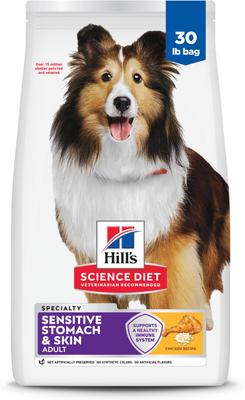
5. Hill’s Science Diet — Adult Perfect Digestion
Hill’s occupies a distinct position in the premium landscape: the brand’s prominence in veterinary clinics has as much to do with its research infrastructure as its food quality. The ActivBiome+ prebiotic technology in the Perfect Digestion line represents a genuinely science-forward approach to gut health — and unlike many competitors, Hill’s can point to actual feeding trial data rather than just formulation-method compliance.
The honest assessment: at 24% dry-matter protein, this is the lowest protein in the guide. For a young, active dog with no health concerns, it’s not the optimal choice. But for a senior dog with chronic digestive issues, or a post-illness recovery scenario where gut consistency matters more than raw protein numbers, the clinical validation becomes the deciding factor. The 4.7/5 rating across thousands of verified reviews suggests owners see real-world results, even if the ingredient list reads less exciting than Orijen’s.
Prices vary — verify current listings.
SMART MONEY TIER Under $60 Per Bag
The most affordable option that still meets premium criteria: named protein first, no artificial additives, and a nutritional profile that meaningfully outperforms standard grocery-store kibble. This is the entry point for owners who want to upgrade their dog’s food without a major budget commitment.
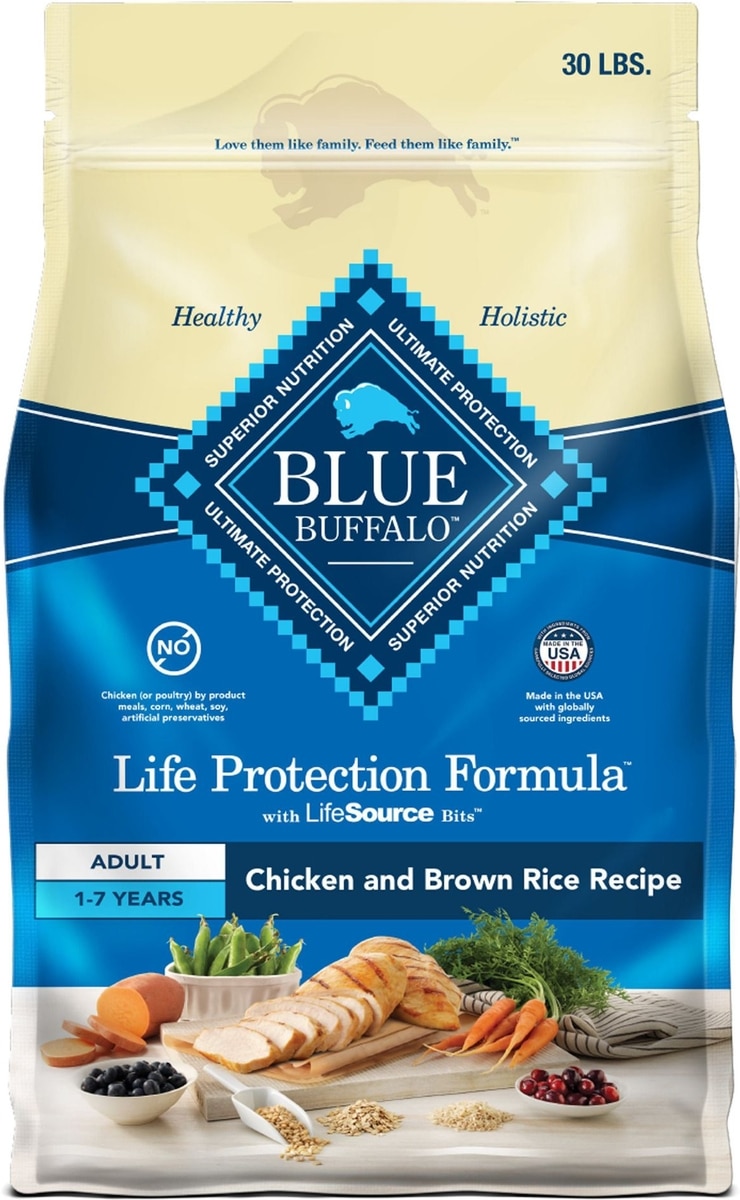
6. Blue Buffalo Life Protection — Chicken & Brown Rice
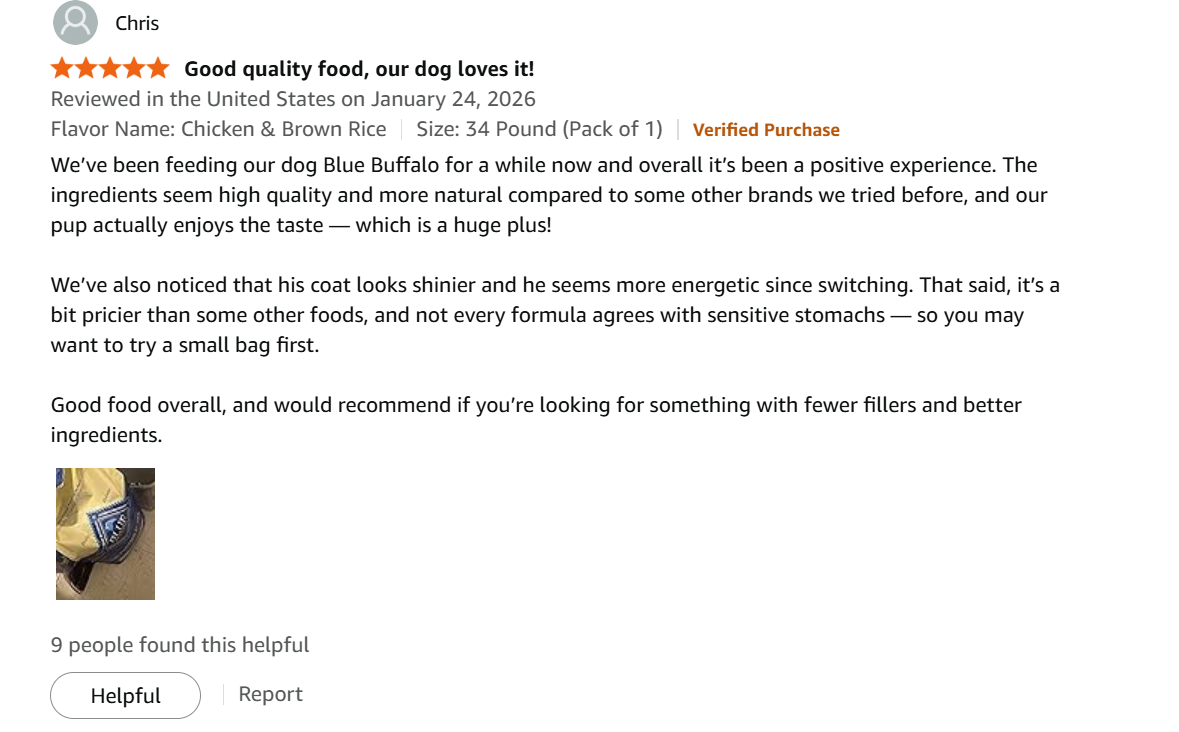
Blue Buffalo’s Life Protection line earns its place in a premium guide through consistent quality at the most accessible price point. Deboned chicken as the first ingredient, whole grains (brown rice, oatmeal), and the proprietary LifeSource Bits — cold-formed antioxidant and vitamin blend that standard extrusion would degrade — are all legitimate premium-tier features at a price that’s roughly half the luxury tier average.
The 2016 lawsuit regarding undisclosed poultry by-products is relevant context but should be evaluated against current formulation quality. Blue Buffalo has since increased its quality control claims. The ingredient sourcing is less transparent than Orijen or Annamaet — which matters for owners who prioritize supply chain visibility — but the end product is nutritionally sound for the price. At $54.99 for a 30-lb bag, it represents the most practical upgrade from standard kibble for the average household.
Prices vary — verify current listings.
What You’re Actually Paying For: Premium vs. Standard
The premium price premium typically runs 40–70% above standard kibble. Whether that’s justified depends on what specifically matters in a given household. Here’s a straightforward breakdown:
| Factor | Standard Kibble | Premium Tier | Observable Difference |
|---|---|---|---|
| First ingredient | Often “chicken meal” or “poultry by-product meal” | Named whole protein (“deboned chicken”) | Better amino acid profile |
| Protein DM | 22–26% | 32–43% | Muscle maintenance, energy |
| Carb source | Corn, wheat, soy | Brown rice, barley, sweet potato | Digestive tolerance |
| Preservatives | BHA, BHT, ethoxyquin possible | Mixed tocopherols (natural) | Long-term health |
| AAFCO method | Formulation (paper) | Often feeding trial (live animals) | Bioavailability |
Frequently Asked Questions
Is premium dog food actually worth the extra cost?
For healthy adult dogs with no known sensitivities, the improvement from upgrading from a decent mid-range food to a premium option is often subtle — better coat quality over 4–6 weeks, slightly firmer stool, marginally higher energy levels. The most noticeable improvements tend to occur in dogs switching from genuinely low-quality food (heavy corn/wheat fillers, artificial preservatives) to any named-protein-first formula. The return diminishes at the luxury tier unless the dog has specific health needs that a particular formula addresses.
Should I switch to grain-free premium food?
Not necessarily. Unless a veterinarian has diagnosed a grain allergy, grain-inclusive premium formulas (Orijen Amazing Grains, Blue Buffalo Life Protection) are the safer default. The FDA’s DCM investigation into grain-free diets was closed without establishing causation, but the veterinary cardiology community remains cautious. For dogs with no cardiac risk factors, grain-free is a reasonable choice — but it shouldn’t be the default assumption.
How do I transition from standard to premium food?
Gradually, over 7–10 days. Start at 25% new / 75% current, increasing the new food ratio by 25% every 2–3 days. If stool loosens at any point, slow the transition. A tablespoon of plain canned pumpkin (not pie filling) can help stabilize digestion during the switch.
Which premium tier is right for most households?
For most healthy dogs without specific health conditions, the Upper-Mid tier (Instinct Raw Boost or Hill’s Science Diet) offers the best balance of nutritional quality and reasonable cost. The Luxury tier (Orijen, Farmina) is the right choice for owners who prioritize maximum protein density and ingredient diversity and have the budget to sustain it. The Smart Money tier (Blue Buffalo) is the practical upgrade for households transitioning from standard kibble.
Final Assessment
The premium dog food market in 2026 offers genuine quality improvements over standard kibble — but only when brands are evaluated on their actual nutritional profiles rather than their packaging claims. The six formulas in this guide were selected because they deliver measurable differences in ingredient quality, protein sourcing, and manufacturing standards that justify their higher price points.
Orijen remains the nutritional benchmark for protein density and whole-prey ratios. Farmina and Annamaet offer differentiated alternatives for owners seeking novel proteins or smaller-batch production. Instinct bridges the gap between kibble and raw feeding. Hill’s brings clinical validation that no other brand at this price point matches. And Blue Buffalo proves that a meaningful quality upgrade doesn’t require a $100+ monthly feeding budget.
The most reliable approach: match the tier to the dog’s specific needs, not to the brand with the most appealing package. A senior dog with digestive issues benefits more from Hill’s than Orijen. An active adult with no health concerns gets the most from Orijen’s protein density. And a household on a tighter budget still gets a meaningful upgrade with Blue Buffalo. Every one of these is a legitimate premium choice — the question is which one matches the dog in front of you.

About James Miller
Dog owner from Shanghai. Every article on FurryFriendTips is based on personal research — reading labels, tracking FDA recalls, consulting veterinary professionals, and testing food with my Maltese, Snowy. No sponsorships, no brand deals. Read my full story →
🐾 First-hand experience · Vet fact-checked · Updated weekly