📅 Last updated: March 2026
My French Bulldog Baguette was gassy. Like, clear-the-room gassy. She also had recurring hot spots on her chin and loose stools at least three times a week. My vet confirmed she wasn’t sick — she was just eating the wrong food for her breed.
Three food changes and a lot of label-reading later, I understand why finding the best dog food for French Bulldogs is so much harder than it looks. Frenchies have a combination of traits — flat face, compact gut, skin sensitivity, obesity risk — that makes generic “premium” kibble genuinely insufficient for many of them.
This guide cuts through the noise. Here’s what the research says, what actually works, and the three foods that made the biggest difference for Baguette.
Why French Bulldogs Need Specialized Nutrition

French Bulldogs aren’t just small dogs. Their brachycephalic (flat-faced) anatomy directly affects how they eat, breathe, and digest — and those differences have real nutritional consequences.
Because of their short snouts, Frenchies tend to gulp food and air simultaneously, which increases bloating, gas, and regurgitation risk. Their compact digestive tracts are more sensitive than most breeds, making them prone to loose stools and gut inflammation when fed heavily processed ingredients, common fillers, or allergen-heavy proteins like chicken and beef. According to the American Kennel Club’s French Bulldog breed guide, Frenchies require a carefully balanced diet to maintain healthy weight — because obesity dramatically worsens the breathing difficulties already built into their anatomy.
Research from January 2026 in Frenchie Insights confirms the nutritional targets: 22–25% protein and 12–16% fat form the foundation of optimal Frenchie nutrition — with small kibble size, high digestibility, and limited ingredients as equally important criteria. Most mass-market dog foods fail on at least two of those counts.
The health stakes are real. A poor diet for a French Bulldog doesn’t just cause an upset stomach — it can worsen brachycephalic airway syndrome, accelerate joint problems, trigger chronic skin conditions, and shorten a dog’s comfortable years. For dogs already managing allergies alongside digestive issues, our breakdown of best dog food for dogs with allergies and sensitive stomachs covers the overlap in detail.
What to Look for in French Bulldog Food
- 🥩 Named single-source protein first — salmon, duck, turkey, or lamb tend to be better tolerated than chicken or beef for sensitive Frenchies
- 🌾 Limited or no common allergens — corn, wheat, soy, and artificial additives are the top triggers for French Bulldog skin flares and GI upset
- 💊 Probiotics or prebiotics included — Frenchie guts need active microbiome support; this isn’t optional for sensitive dogs
- 🐟 Omega-3 fatty acids (EPA + DHA) — essential for managing the skin inflammation and coat issues Frenchies are genetically predisposed to
- 🦴 Glucosamine and chondroitin — joint support is critical; Frenchies are prone to hip dysplasia and IVDD even in middle age
- ⚖️ Calorie-controlled formula — Frenchies gain weight fast and lose it slowly; portion-dense food with low filler calories is the goal
Best Dog Food for French Bulldogs in 2026

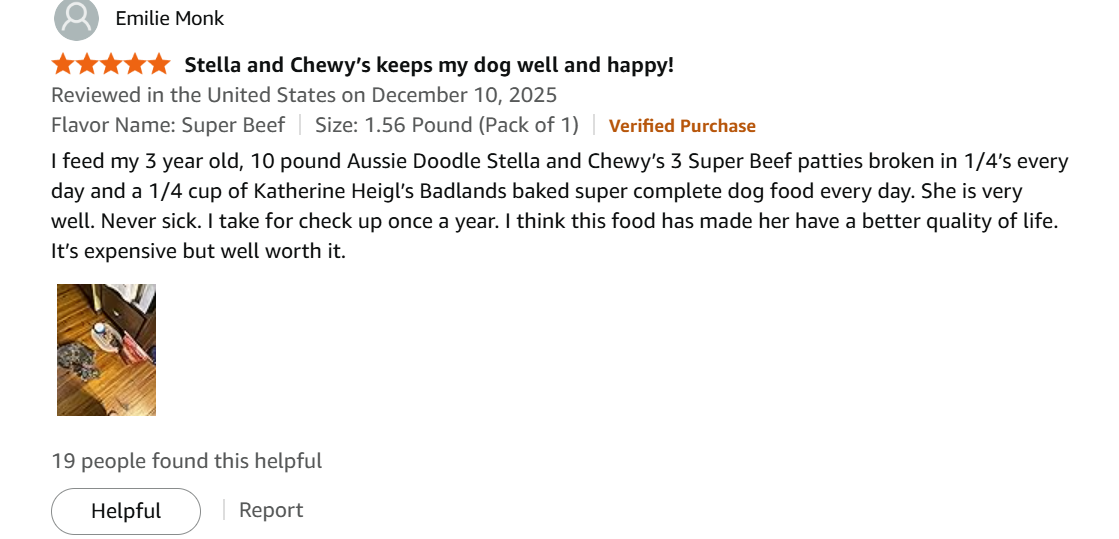

Side-by-Side Comparison: Which Formula Fits Your Frenchie?
| Stella & Chewy’s | Grain-Free Kibble | Life Stage Formula | |
|---|---|---|---|
| Best use case | Skin issues, sensitivities, picky eaters | Daily maintenance, gas control | Puppy growth, senior support |
| Format | Freeze-dried raw | Dry kibble (small breed) | Dry kibble / wet |
| Grain-free | ✅ Yes | ✅ Yes | Check label per recipe |
| Joint support | Natural from raw bone | Limited | ✅ Glucosamine + chondroitin |
| Budget | Premium ($$$$) | Moderate ($$$) | Moderate ($$$) |
What Most Articles Get Wrong About French Bulldog Food
❌ “Grain-free is always better for Frenchies”
Grain-free reduces the risk of grain sensitivities — but not all French Bulldogs have grain sensitivities. The FDA’s ongoing investigation into a potential link between grain-free diets and dilated cardiomyopathy (DCM) in dogs remains unresolved as of 2026. If your Frenchie doesn’t show signs of grain intolerance, a high-quality grain-inclusive formula from a reputable manufacturer is a valid choice. The real enemy is low-quality fillers — not grains per se.
❌ “The first ingredient tells you everything”
Ingredient lists are ordered by pre-cooking weight — which means a food can list “chicken” first and still derive the majority of its protein from cheaper rendered meal sources listed further down. Look at the ratio of named proteins across the full list, not just the first line. A food with chicken, chicken meal, salmon, and turkey meal in positions 1–4 delivers far more quality protein than one with chicken first and “poultry by-product meal” in position 2.
❌ “Senior Frenchies need less protein”
This advice is outdated and actively harmful for French Bulldogs. Older dogs need more high-quality protein to compensate for age-related muscle loss — not less. Many mainstream “senior” formulas reduce protein to cut costs, which causes muscle wasting in aging Frenchies. Dog Food Advisor’s 2026 analysis confirms that the best senior foods for French Bulldogs maintain at least 28% protein, which is above the AAFCO adult minimum of 18%.
How to Feed a French Bulldog: Practical Guidelines for 2026
Transition slowly. French Bulldogs have sensitive digestive systems that react badly to abrupt food changes. Switch over 10–14 days minimum: start with 25% new food mixed into 75% old food, increase gradually, and watch for stool changes throughout. If loose stools appear, slow down the transition — don’t push through it.
Use a slow feeder bowl. Because Frenchies gulp food due to their flat-faced anatomy, a slow feeder bowl is one of the highest-impact, lowest-cost interventions available. It reduces air intake, minimizes bloating and post-meal gas, and extends mealtime to a healthier pace. Pair it with moistening kibble in warm water if your dog still eats too fast. For Frenchies already on a stomach-friendly diet, our guide to best slow feeder bowls for flat-faced dogs covers the best options by size and design.
Feed twice daily, not once. One large meal increases bloat risk and blood sugar swings. Two equal meals — morning and evening — distribute digestive load and maintain more stable energy throughout the day.
Watch portions obsessively. French Bulldogs gain weight faster than almost any small breed. The guidelines on most food bags are designed for average activity levels — Frenchies are below average. Start at the low end of the recommended range and adjust based on body condition, not hunger cues. If you can’t feel ribs easily with light pressure, the portion is too large.
Frequently Asked Questions
What is the best food for a French Bulldog with a sensitive stomach?
Limited-ingredient formulas with single-source proteins like salmon, duck, or lamb are best for sensitive French Bulldogs. Avoid chicken and beef if your dog shows signs of intolerance (loose stools, skin itching, excessive gas). Freeze-dried raw foods like Stella & Chewy’s are particularly effective because the minimal processing preserves digestibility. Adding a probiotic alongside the food significantly improves outcomes for chronically sensitive dogs.
How much should I feed my French Bulldog?
Most adult French Bulldogs (20–28 lbs) need between 1 and 1.5 cups of dry kibble per day, split across two meals. However, caloric density varies enormously between formulas — a nutrient-dense freeze-dried food requires far smaller portions than a filler-heavy kibble. Always start at the low end of the manufacturer’s guidelines and adjust based on body condition score rather than the dog’s visible hunger. If you can’t easily feel the ribs, reduce portion size.
Why does my French Bulldog have so much gas?
Excessive gas in Frenchies is almost always caused by one of three things: eating too fast (gulping air), a food ingredient they’re sensitive to, or low dietary fiber causing fermentation in the large intestine. The fastest fix is a slow feeder bowl combined with a food switch to a limited-ingredient formula without common allergens. Adding a daily probiotic also reduces gas-causing bacterial overgrowth in the gut within 4–7 days of consistent use.
Can French Bulldogs eat grain-free food?
Yes — but only if they actually benefit from it. Frenchies with confirmed grain sensitivities do well on grain-free formulas. However, the FDA has flagged a potential link between grain-free diets and dilated cardiomyopathy (DCM) in dogs, and that investigation remains ongoing in 2026. If your French Bulldog tolerates grains without symptoms, there’s no compelling reason to go grain-free. Prioritize ingredient quality over grain status.
When should I switch my French Bulldog from puppy to adult food?
French Bulldogs are considered adult at 9–12 months. At that point, transition from a puppy formula (which is calorie-dense and high in calcium for bone development) to an adult formula calibrated for maintenance. Making the switch too late contributes to the weight gain problem many Frenchies experience in their first two years. Transition over 10–14 days to avoid digestive upset during the formula change.