In recent years, Korean-style fat grafting has transformed from a basic volume-adding procedure into a highly refined aesthetic technique. Known as “K-Fat Grafting 2.0,” this new generation of fat grafting focuses not just on filling, but on contouring, harmony, micro-layer design, and long-lasting natural softness.
Why do results from Korean clinics often look more delicate, youthful, and realistic than traditional fat grafting performed elsewhere?
Here is the full breakdown of what makes Korea’s advanced technique different.

1. Korean Aesthetics Aim for Soft Harmony, Not Excess Volume
Traditional fat grafting in many countries tends to follow a “fill the empty space” approach.
Korean surgeons, however, prioritize facial harmony. Instead of adding large amounts of fat, they analyze:
-
bone structure
-
fat compartment distribution
-
shadow areas
-
age-related hollowing
-
symmetry
-
mid-face support
The goal is to restore the natural curves of youth: a gentle under-eye slope, smooth transition from cheek to jaw, and soft facial contours.
This is why Korean fat grafting rarely looks “overfilled” or puffy.
2. Fat Grafting 2.0 Uses Micro-Particle Fat for a Smoother Finish
Korea has popularized micro-particle fat (nano fat / micro fat), processed through:
-
filtration
-
centrifugation
-
emulsification
-
mesh refinement
The smaller the particles, the more evenly they blend into the skin layers.
Micro fat is used for:
-
under-eye hollows
-
forehead smoothness
-
temples
-
fine wrinkles
-
smile-line transitions
Standard fat is used for:
-
cheeks
-
jawline
-
midface lift
-
chin contour
By using different particle sizes for different anatomical layers, Korean surgeons create a much more natural texture and a seamless contour.
3. Layer-by-Layer Injection Creates Softer, More Stable Results
A major difference in Korean technique is multi-layer injection, not just subcutaneous filling.
K-Fat Grafting 2.0 carefully distributes fat into:
-
deep fat compartments
-
mid-level compartments
-
superficial fat layers
-
dermal micro-channels (for nano fat)
This “3D layering” design prevents:
-
lumpiness
-
uneven surfaces
-
harsh transitions
-
unnatural swelling
And most importantly: it improves survival rate because each layer receives optimal blood supply.
4. Korean Clinics Prioritize High Fat Survival Rate With Advanced Processing
Fat survival depends heavily on how the fat is harvested and processed. Korean clinics use:
-
Low-pressure extraction to avoid damaging cells
-
Closed sterile systems to maintain fat purity
-
Minimal air exposure to prevent oxidation
-
Advanced centrifugation to separate pure fat from oil and fluids
-
Stem-cell-rich nano fat to promote regeneration
The result is healthier grafts that have a higher chance of long-term retention.
This is why Korean fat grafting often maintains volume longer and with fewer touch-ups.
5. K-Fat Grafting Focuses on Youthful “Lift,” Not Just Volume
A signature feature of Korean fat grafting is structural correction.
Instead of filling only hollow areas, many Korean surgeons strategically inject fat to:
-
subtly lift the midface
-
support the tear trough
-
soften nasolabial folds
-
lift the corners of the mouth
-
improve jawline definition
-
restore youthful projection
This gives patients a fresher, more energetic appearance — without looking “done.”

6. Korean Surgeons Combine Fat With Regenerative Boosters
Fat grafting 2.0 often includes boosters that accelerate healing and improve survival, such as:
-
PRP (Platelet-Rich Plasma)
-
PDRN / Salmon DNA
-
Exosomes
-
Growth factor serums
These regenerative treatments help:
-
reduce downtime
-
improve skin elasticity
-
reduce bruising
-
increase fat graft integration
-
enhance overall glow
This combination is one reason Korean patients often appear more radiant after recovery.
7. The “Natural Touch” Comes From Korean Injection Technique
Korean surgeons are known for extremely delicate cannula handling. Their key principles:
-
small-volume micro-injections
-
evenly dispersed threads of fat
-
gentle fanning techniques
-
minimal trauma
-
slow injection for higher survival
This prevents clumping and promotes natural softness, especially in sensitive areas like:
-
under-eyes
-
temples
-
lips
-
forehead
8. Recovery Is Faster Due to Precision and Lower Trauma
Because of micro-cannulas and layer-by-layer techniques, Korean fat grafting typically results in:
-
less swelling
-
fewer irregularities
-
minimal bruising
-
shorter downtime
-
smoother recovery
Many patients return to daily life within several days.
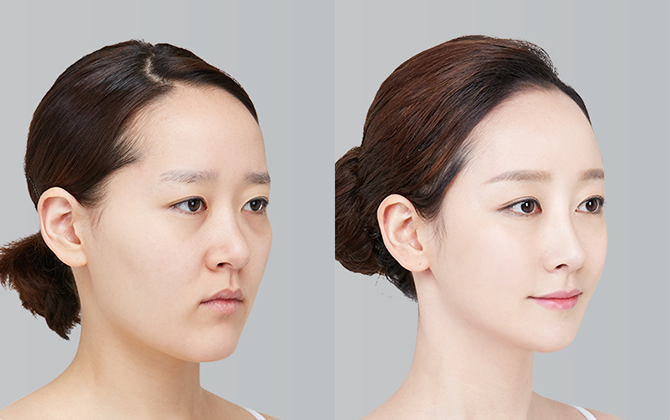
9. K-Fat Grafting 2.0 Creates Results That Are Hard to Detect — In a Good Way
The combination of:
-
multi-layer mapping
-
micro-particle design
-
structural lifting
-
regenerative boosters
-
refined injection techniques
produces results that look like you simply aged backward, not like you underwent a cosmetic procedure.
Patients don’t appear “filled” — they appear rested, glowing, and naturally youthful.
Final Thoughts
Korean Fat Grafting 2.0 is far more than a simple volume-addition procedure. It is a fusion of engineering-level precision, aesthetic philosophy, and regenerative science.
That’s why Korean results consistently look:
-
softer
-
smoother
-
more natural
-
longer-lasting
-
harmoniously contoured